
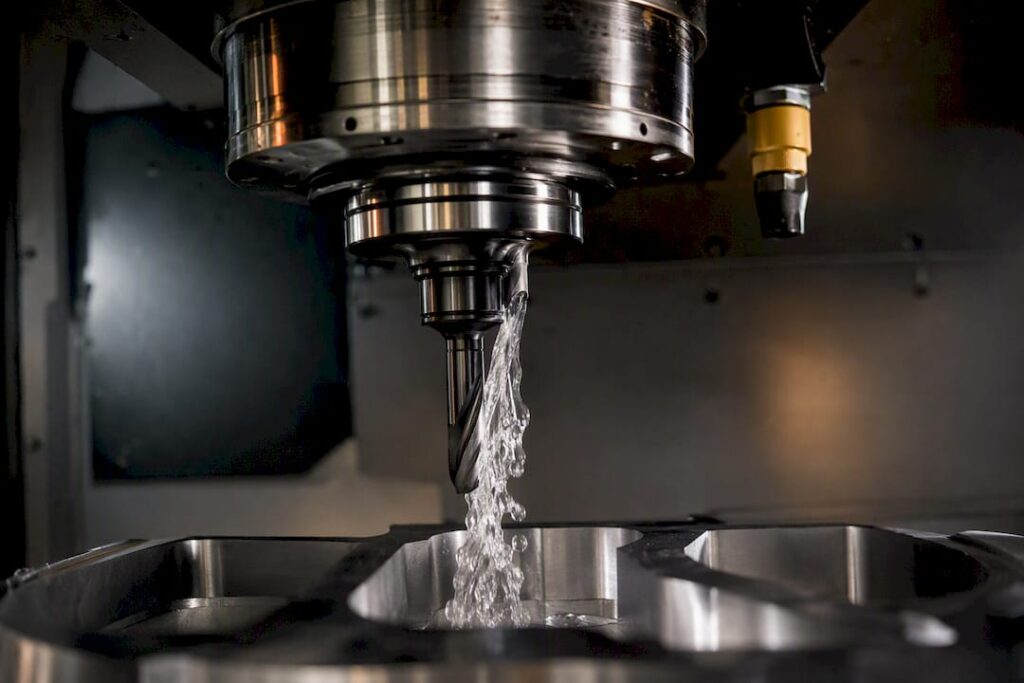
Through spindle coolant (TSC) delivers cutting fluid through the machine’s spindle and tool bore straight to the cutting edge, instead of spraying it externally. It earns its place on a machine when you’re drilling deep holes, fighting chip packing in pockets, or running high-volume production where tool life and cycle time actually move the bottom line. The sections below cover the mechanics, tooling compatibility, safety controls and what to ask a machinery supplier before you commit.
TL;DR:
- Through spindle coolant offers significant benefits for deep-hole drilling and high-volume production by enhancing chip evacuation and extending tool life.
- It requires compatible sealed tooling, high-pressure pumps, and proper filtration to prevent clogging and ensure effective coolant flow.
- The system’s cost, maintenance, and safety hazards like mist require careful management, including regular filtration checks and proper ventilation.
- TSC is most effective with materials that produce stringy chips, such as aluminum and certain steels, and is less justified for shallow or light milling operations.
- Verify machine-specific M-codes and tooling compatibility before implementation, and always follow safety procedures to control coolant mist exposure.
Table of Contents
- What is through spindle coolant?
- How TSC works in practice: pumps, seals and filtration
- Benefits and limitations of TSC
- Applications and materials where TSC helps most
- Compatibility and control checks: collets, sealed holders and M-codes
- Safety, ventilation and maintenance best practice
- Questions for machine selection and coolant compatibility
- Discuss machine compatibility and local support
- Sources
- FAQ
What is through spindle coolant?
Through spindle coolant routes fluid down a channel in the spindle and tool, exiting near the cutting edge rather than being sprayed externally the way flood coolant is. That direct path means fluid reaches the point of cutting even when the tool is buried in a deep hole or a tight pocket where an external nozzle simply can’t get a line of sight.
The practical payoff is chip evacuation. Coolant under pressure pushes chips out of the flute and away from the cutting zone, which reduces recutting and heat buildup at the tip. A review of coolant application methods notes that coolants serve several functions at once: dissipating heat, lubricating the tool-workpiece interface, flushing chips and protecting against corrosion, with the right choice depending on the process, the material and cost.
Fluid chemistries used with TSC systems typically include:
- Soluble oil emulsions, common for general-purpose milling and drilling.
- Semi-synthetic and synthetic fluids, often preferred where filtration and bacterial control matter more.
- Straight cutting oils, used in some deep-hole drilling and tapping operations.
Whatever fluid you run, keep the safety data sheet (SDS) on hand and follow the handling and storage instructions it specifies.
How TSC works in practice: pumps, seals and filtration
A functioning TSC system relies on several components working together, not just a pump bolted to the spindle.
- High-pressure pump, which forces fluid through the spindle at pressures suited to the operation, higher for deep-hole drilling than for light finishing passes.
- Rotary union, the seal that lets fluid pass from a stationary supply line into the rotating spindle without leaking.
- Sealed tool holders and through-tool channels, which carry fluid from the spindle nose to the cutting edge.
- Filtration, which keeps particulate out of the narrow internal passages before it can cause blockages or wear.
Pressure and filtration are the two variables that decide whether the system actually clears chips or just adds mess. Too little pressure and chips pack instead of evacuating; contaminated fluid and undersized filtration wear rotary unions and score internal bores over time. A high-pressure pump suited to the material and hole depth is often the difference between clean evacuation and repeated chip jamming in aluminium work.
Routine maintenance keeps the system reliable: check filter condition on a set schedule rather than waiting for a pressure drop to tell you, monitor pump pressure against the machine’s baseline, and keep contaminants out of the tank in the first place. A preventive maintenance checklist that includes coolant filtration alongside spindle and slideway checks catches problems before they become downtime.
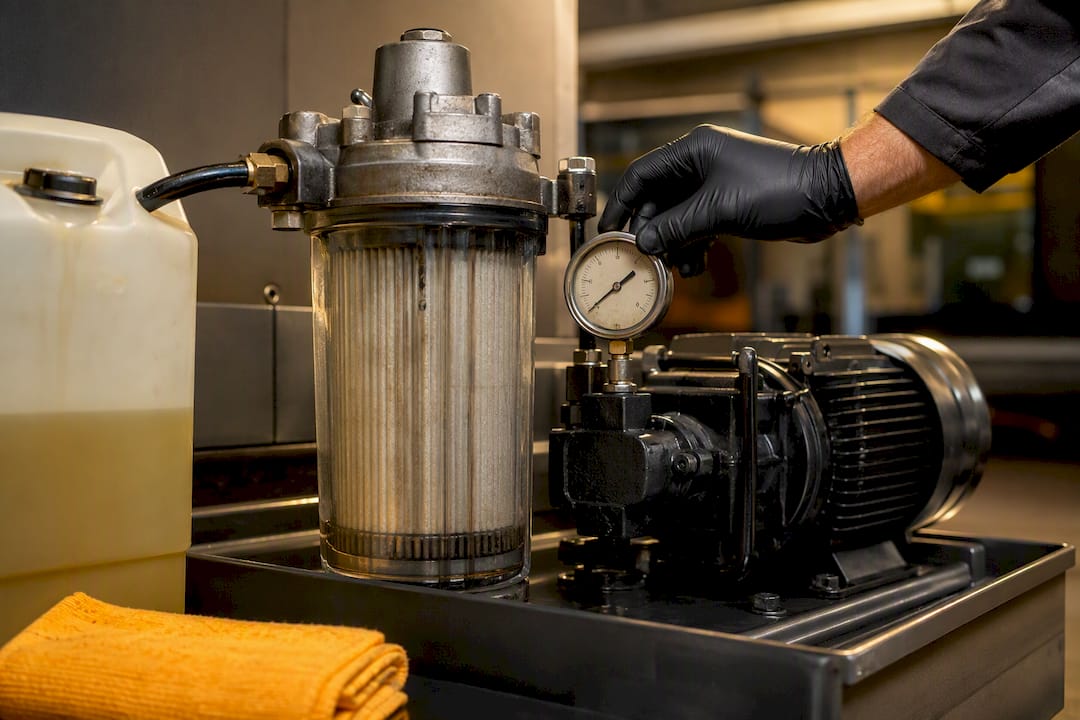
Pro Tip: Log pump pressure at the start of each shift; a gradual drop over weeks usually means the filter needs attention before it means the pump is failing.
Benefits and limitations of TSC
TSC earns its keep in specific conditions, not across the board.
- Tool life and finish: clearing chips at the cutting edge reduces recutting and heat, which tends to extend tool life and improve surface finish on deep or blind holes.
- Cycle time: reliable evacuation lets you run faster through-drilling cycles without pecking to clear chips as often.
- Capital and upkeep: a pump, rotary union, sealed holders and filtration add cost upfront and ongoing maintenance load compared with flood coolant.
- Mist and fluid management: pressurised delivery can increase airborne mist if guarding and extraction aren’t adequate, and fluid needs monitoring for contamination.
An engineering perspective on TSC frames the decision as a straightforward cost-benefit calculation: it improves reliability and tool life for many operations, but the filtration and pump maintenance demand has to be weighed against the process it’s serving, rather than assumed to be worthwhile by default. If your holes are shallow, your material machines cleanly, and flood or air-blast already clears chips without recutting, TSC may not justify the added complexity.
Applications and materials where TSC helps most
TSC shows its value most clearly where chips have nowhere to go on their own.
- Deep-hole drilling, where the length-to-diameter ratio makes external coolant delivery ineffective.
- Helical entry pocketing, where chips can pack into the pocket faster than air or flood spray can clear them.
- Long-hole tapping, where trapped chips risk breaking taps or damaging thread quality.
- Aluminium and certain steels, where stringy or fine chips tend to reweld or pack without direct flushing.
Metal-machining centres with verified through-spindle coolant and compatible tooling can be candidates for high-hole-count or repeated deep-drilling work; assess the exact material and process. For simple face milling, shallow holes, or light finishing passes, flood coolant or even air-blast chip clearing is often sufficient, and adding TSC there mostly adds cost without a matching gain.
Compatibility and control checks: collets, sealed holders and M-codes
Before switching TSC on, check that the tooling and controls actually support it. Standard ER collets are not built for through-tool pressure: research on CNC milling tooling notes that some ER collets spray coolant in a wide cone rather than directing it through the tool, and that sealed through-coolant collets or holders with O-rings are needed for effective pressure and chip evacuation. The same tooling guidance points out that for deep-hole drilling, sealed PG or specialised holders avoid this spray pattern, and correct tool seating depth prevents damage to the seals.
M-code mappings for TSC are not standardised across machine builders. A review of CNC coolant and chip control codes warns that auxiliary M-codes vary by manufacturer, and using one without checking the machine’s own documentation can trigger an unintended operation.
Run through this before enabling TSC on a new job:
- Confirm the tool holder and collet are rated for through-coolant use, not a standard ER collet.
- Check tool insertion depth and O-ring condition to prevent coolant bypass.
- Verify the correct M-code against your machine’s control manual, not a general reference.
- Test the cycle in single-block or dry-run mode before running it unattended.
Safety, ventilation and maintenance best practice
Coolant mist is a genuine respiratory hazard, not just a housekeeping nuisance. SafeWork SA’s guidance on metalworking fluids links inhaling mist to asthma, bronchitis and hypersensitivity pneumonitis, and states that employers should keep SDSs on hand and use engineering controls such as local exhaust ventilation (LEV) and splash guards rather than relying on PPE alone.
Controls worth having in place:
- Local exhaust ventilation (LEV) positioned to capture mist at the cutting zone.
- Enclosures and splash guards around the working area to contain spray.
- Documented SDSs for every fluid in use, with staff trained on handling procedures.
- Regular fluid checks for contamination and correct disposal of spent coolant.
LEV systems need routine performance checks, not a set-and-forget install. WorkSafe Queensland’s guidance on LEV notes that systems must be inspected and maintained regularly, with airflow checked using tools such as anemometers or smoke tracers, so a drop in extraction performance is caught before it becomes an exposure issue.
Pair LEV checks with the same filtration and pump monitoring covered earlier, and confirm your shop safety controls align with current machinery standards as part of routine reviews.
Questions for machine selection and coolant compatibility
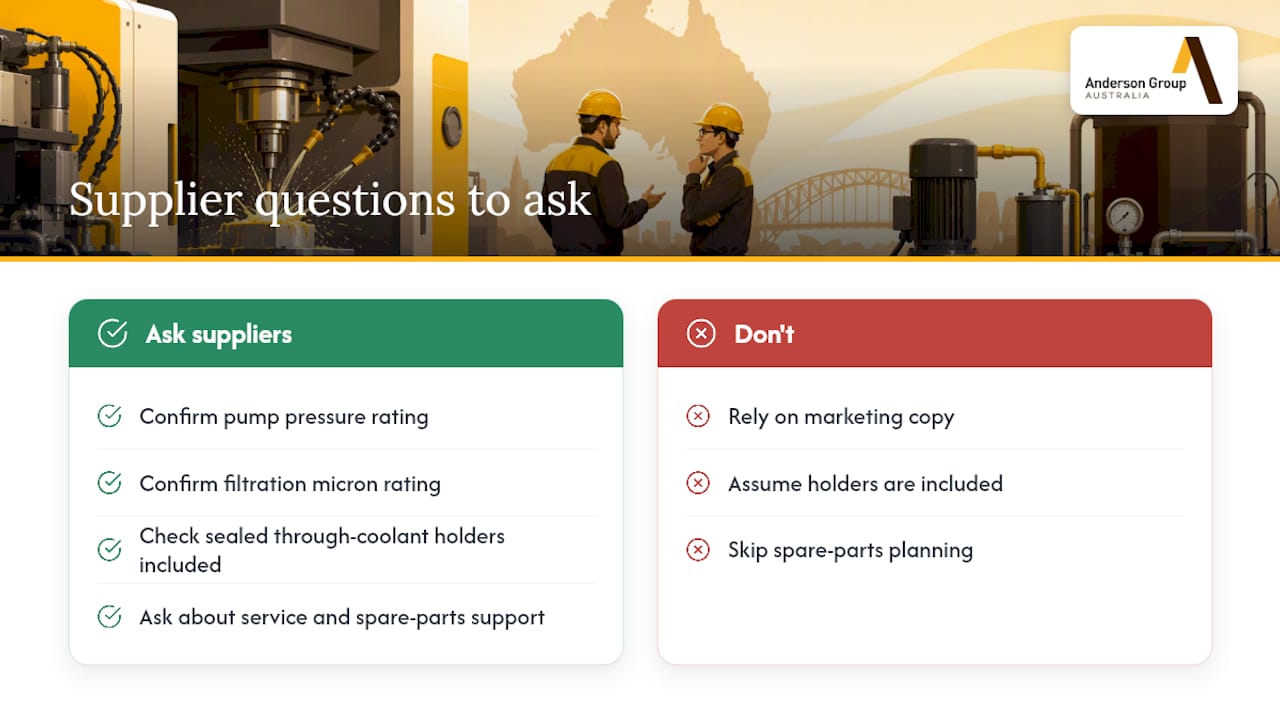
Turning this into a buying decision means pushing suppliers for specifics, not marketing copy. When you’re comparing quotes for a TSC-capable machine, confirm pump pressure rating, filtration micron rating, whether sealed through-coolant holders are included or need to be specified separately, and what service and spare-parts support looks like after delivery.
For metal and aluminium production work, review Metal Machinery and the Focaseiki range, then confirm through-spindle coolant availability, pump pressure, flow, filtration and tooling compatibility for the exact model and configuration. For Wood Machinery and nesting applications, assess dust extraction separately; do not assume through-spindle coolant is fitted or suitable. Confirm installation and maintenance arrangements in the written proposal.
Discuss machine compatibility and local support
Suppliers provide CNC machinery, servicing and parts to manufacturers assessing whether through spindle coolant suits their process. Rather than guessing at pump pressure or filtration specs from a data sheet, you can talk through your actual hole depths, material mix and cycle-time targets and get machine and tooling recommendations that match.
Relevant pages to start from:
- Wood Machinery for panel-processing and joinery production.
- Metal Machinery for metal and aluminium machining centres.
- Machines for the full range of production and vertical machining centres Anderson supplies.
Get in touch to discuss your application and request a quote with the specifications that matter for your job.
Sources
- SafeWork SA — Metalworking fluids
- WorkSafe Queensland — Local exhaust ventilation (LEV)
- Application of coolants during tool-based machining – A review (Curtin University)
- Cnccode
- UNSW Making — Advanced CNC milling tooling
FAQ
Is through spindle coolant worth it?
It’s worth it when you’re running deep-hole drilling, tight pocketing or high-volume production where chip packing or tool wear is already a problem. For shallow holes or light milling where flood coolant already clears chips cleanly, the added pump, filtration and maintenance cost may not pay off.
What coolant to use for a CNC spindle?
The right fluid depends on the material and process: soluble oil emulsions suit general milling and drilling, semi-synthetic and synthetic fluids offer easier filtration and bacterial control, and straight cutting oils are common in deep-hole drilling and tapping. Check the coolant selection guidance for your material mix and always follow the fluid’s SDS.
What is the M code for coolant through spindle on a CNC machine?
There is no single standard M-code for through-spindle coolant across manufacturers. Because M-code mappings vary by control and builder, you need to verify the correct code in your own machine’s documentation before programming it, and test it in single-block mode first.
What is a through coolant drill?
A through coolant drill has an internal channel running from the shank to the cutting tip, allowing coolant pumped through the spindle to reach the cutting edge directly. This is particularly useful in deep-hole drilling, where the drill’s length makes external flood coolant ineffective at clearing chips from the hole.