
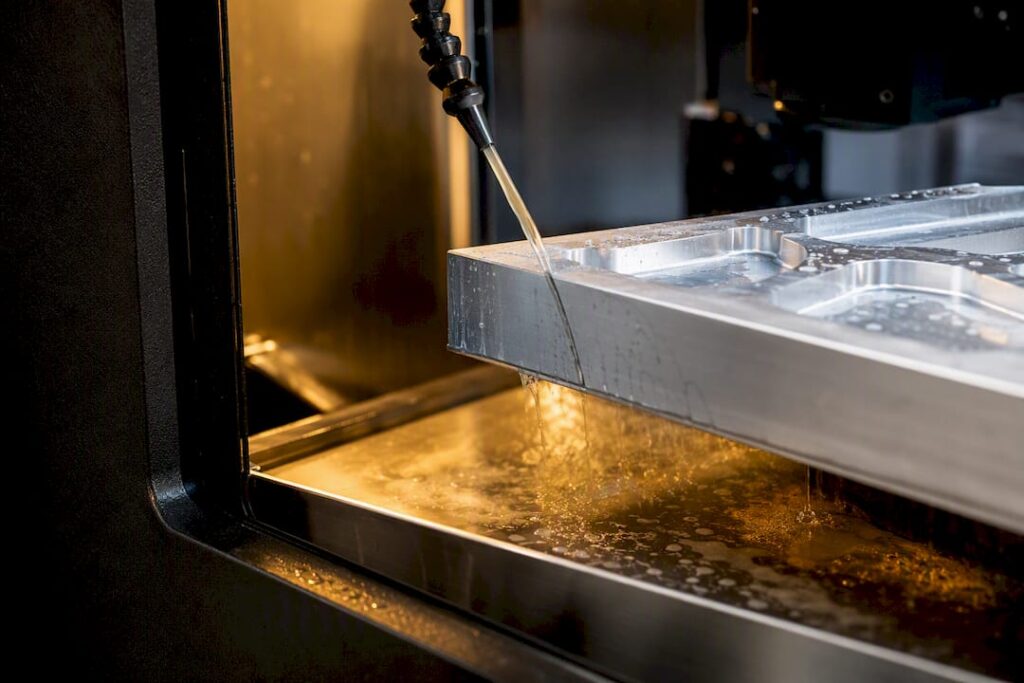
Choose CNC coolant with the fluid and machine suppliers for the actual materials and operations. Follow the product’s technical and safety information for mixing, concentration, compatibility and maintenance. Fluid quality and mist exposure also need assessment; HSE’s metalworking-fluid guidance explains these health considerations.
TL;DR:
Confirm that the fluid is compatible with the alloy, machine and downstream finish; test staining and machining performance before production.
Follow the fluid supplier’s mixing and monitoring instructions, including the correct refractometer factor and water-quality requirements.
Match lubricity, cooling and compatibility to the material and operation with the fluid and machine suppliers.
Use the product’s mixing, concentration and water-quality requirements, and investigate changes in fluid condition.
Proper coolant system setup and regular maintenance from the start, including filtration and concentration checks, are key to avoiding reactive issues and optimizing tool life.
Table of Contents
-
Coolant for CNC machines: the main types and when each one fits
-
Flood, MQL, high-pressure or spindle cooling: matching delivery to the job
Coolant for CNC machines: the main types and when each one fits
Every coolant on the market falls into one of four families, and picking the wrong one for the job is the single fastest way to burn through tooling budgets.
Soluble oil (emulsions) mix mineral oil with emulsifiers to form a milky fluid. They’re cheap and give solid lubricity, which makes them a mainstay for heavy roughing and general steel work. The trade-off is shorter sump life and a tendency to sour if bacterial growth gets ahead of you, especially in warmer shop conditions.
Synthetic coolants contain no mineral oil at all, relying on chemical additives for lubricity and corrosion protection instead. They run clear, resist bacterial contamination far better than emulsions, and clean up easily on parts and machine surfaces. That makes them the pick for high-speed aluminium work, grinding, and any operation where surface finish and visibility through the coolant stream matter.
Semi-synthetic coolants sit between the two, blending a smaller oil content with synthetic additives. You get better lubricity than a full synthetic without the sump-life headaches of a straight emulsion, which is why semi-synthetics have become the default choice for shops running mixed materials on the same machines, tapping and threading included.
Neat (straight) cutting oils are undiluted mineral or synthetic oils with no water at all. They deliver the highest lubricity of any option, which suits deep-hole drilling, broaching, and tough tapping operations where chip welding is a real risk. They don’t dissipate heat as well as water-based fluids, don’t skim for tramp oil the same way, and they’re messier to manage. Most shops reserve them for dedicated operations rather than general milling.
Here’s how the trade-offs stack up in practice:
-
Soluble emulsions: strong lubricity, low cost, shortest sump life, higher microbial risk
-
Synthetics: excellent cooling and cleanliness, longer sump life, lower lubricity for heavy cuts
-
Semi-synthetics: balanced lubricity and cleanliness, moderate sump life, the common middle ground
-
Neat oils: maximum lubricity, poor cooling, no dilution to manage, best for low-speed, high-friction operations
Matching coolant to the material and the operation
Aluminium is where the wrong coolant choice shows up fastest, usually as grey staining, a chalky surface, or edge build-up that ruins a finish pass. Synthetic and semi-synthetic coolants formulated specifically for aluminium reduce built-up edge and avoid staining while still providing the lubricity non-ferrous alloys need. Standard steel-focused emulsions often contain additives, chlorine or sulphur among them, that react with aluminium and leave discolouration that’s hard to polish out. If parts are heading to anodising or plating afterward, that staining becomes a rejection risk, not just a cosmetic one, so cleaning residual coolant off before those processes matters as much as choosing the right fluid to begin with.
Steel and stainless steel usually tolerate a broader range of chemistries, but heavier roughing or tapping on stainless benefits from greater lubricity than a light synthetic provides. That’s where a semi-synthetic, or a neat oil for the toughest tapping operations, earns its place over a straight synthetic.
Titanium and nickel alloys such as Inconel are a different problem entirely. Both generate extreme cutting temperatures and work-harden quickly, so the coolant’s job shifts toward aggressive heat removal and chlorine-free chemistry to avoid stress corrosion cracking. These are the jobs where guessing is expensive. Pull the supplier’s technical data sheet before committing, or call their technical line, because the wrong additive package on a $2,000 titanium blank costs a lot more than a phone call.
-
Aluminium and non-ferrous: use a non-ferrous synthetic or semi-synthetic; check chlorine content before anodising
-
General steel: soluble emulsion or semi-synthetic for most milling and turning
-
Heavy roughing or tapping on stainless: semi-synthetic with higher lubricity, or a neat oil for the toughest cuts
-
Titanium, Inconel, exotic alloys: consult the supplier TDS before running anything
If your shop runs mixed materials, our aluminium extrusion machining guide covers the specification details that matter before the first chip flies.
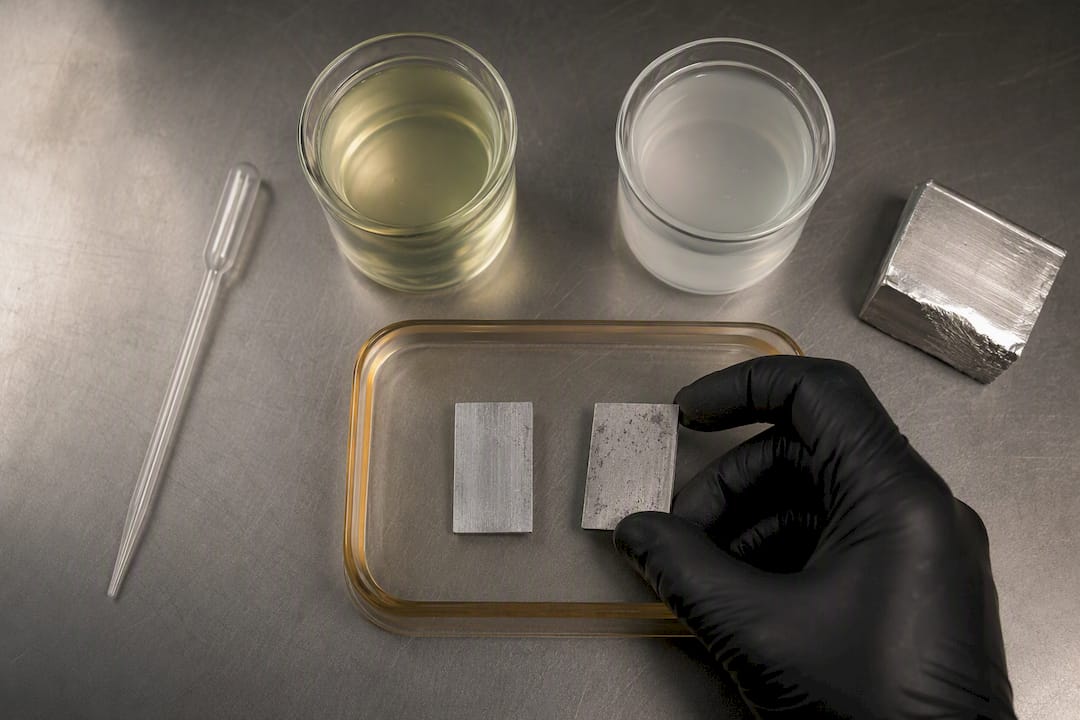
Pro Tip: Keep a small sample of any new coolant on a scrap piece of your most common alloy for 24 to 48 hours before committing a full sump. Staining or discolouration on aluminium shows up fast and saves you an expensive drain-and-refill later.
Mixing coolant correctly and keeping the sump alive
Get the mix wrong and nothing else you do matters. Always add concentrate to water, never water to concentrate; reversing that order risks inverting the emulsion into an unstable, unusable mess that separates in the sump instead of staying suspended. Water quality matters just as much as mixing order. Distilled or deionised water improves sump life and corrosion inhibition by removing the dissolved minerals that destabilise emulsions and accelerate hard water scale on machine surfaces.
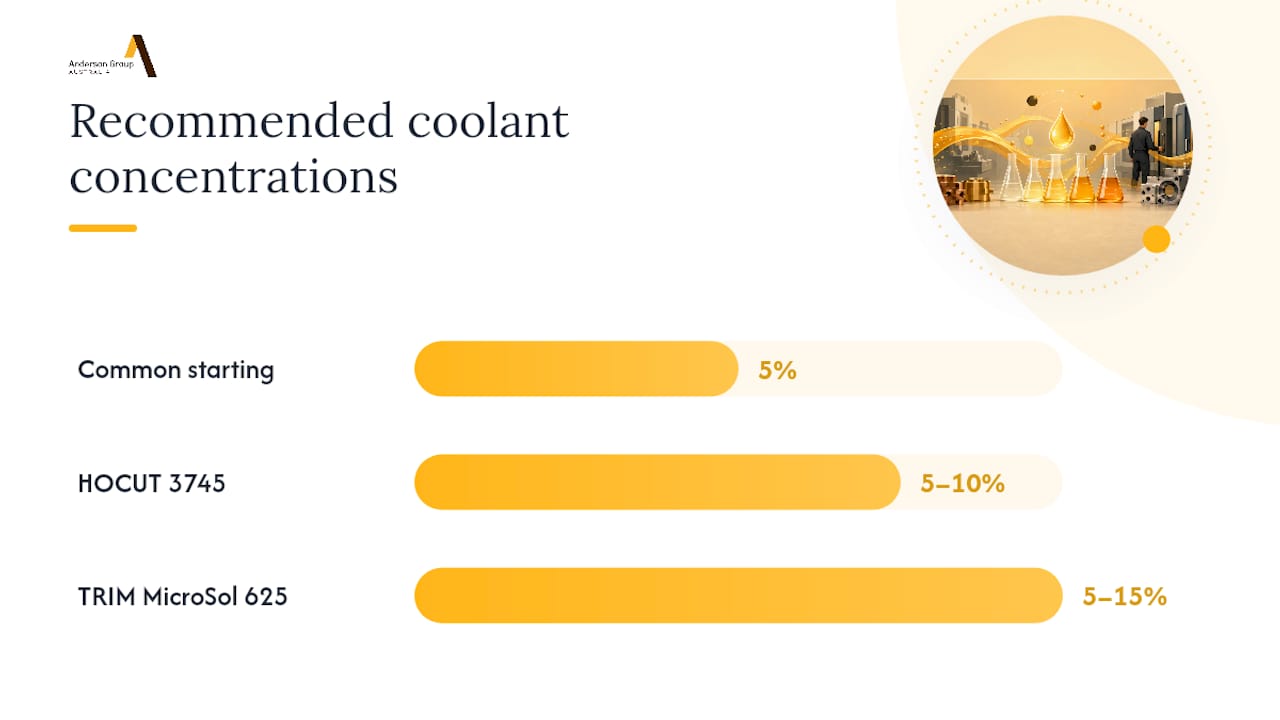
Recommended concentrations vary by product. TRIM MicroSol 625 NXT runs at 5% to 15% depending on the operation, while HOCUT 3745 typically starts at 5% to 10% for aluminium and ferrous work. Never eyeball concentration. A refractometer takes seconds to use: place a drop of coolant on the prism, read the scale against natural light, and multiply by the product’s refractive index factor from its TDS.
A practical maintenance routine looks like this:
-
Check concentration with a refractometer daily on high-use machines, twice weekly on lighter-duty ones
-
Skim tramp oil daily with a belt or disc skimmer, and inspect visually every shift for a floating oil layer
-
Log every reading, top-up volume, and skimmer runtime in a sump logbook next to the machine
-
Dose biocide only as directed on the TDS, and never as a substitute for skimming
-
Watch for the warning signs of a failing sump: strong odour, foaming, sudden pH drop, or rust on parts overnight
One shop-floor habit worth stealing: a logbook next to each sump that tracks refractometer readings, skimmer runtime and biocide dosing dates is a small discipline that tends to roughly double effective sump life, because problems get caught while they’re still cheap to fix. Tramp oil is the biggest silent killer of coolant performance. It floats on top, starves the emulsion of oxygen, and feeds the bacteria that turn a healthy sump sour within days.
Flood, MQL, high-pressure or spindle cooling: matching delivery to the job
Flood coolant remains the workhorse for most CNC operations, giving reliable chip evacuation and consistent surface finish across a wide range of materials. It needs a proper enclosure and regular housekeeping to stop coolant escaping the work zone, but the trade-off is worth it for anything beyond light finishing passes.
Minimum quantity lubrication (MQL) applies a fine mist instead of a flood, cutting fluid consumption and sump maintenance dramatically. MQL suits intermittent light milling well but struggles with deep-hole drilling or high material removal rates, where heat and chip volume overwhelm what a mist can carry away.
-
Flood coolant: best all-rounder, needs enclosure and filtration upkeep
-
MQL: minimal fluid use, poor fit for deep holes or heavy roughing
-
High-pressure coolant: necessary for deep drilling and hard alloys, demands robust seals and pump maintenance
-
Spindle cooling: use distilled water in water-cooled spindles to protect bearings and seals from scale and corrosion
Spindle cooling deserves its own attention separate from cutting fluid entirely. Check what your spindle actually specifies before assuming tap water is fine.
Coolant safety, handling and disposal
Coolant exposure adds up over years, not days. Skin contact with used coolant causes dermatitis in operators who skip gloves, and airborne mist from high-speed machining is a genuine respiratory concern in poorly ventilated bays.
-
Wear nitrile gloves and safety glasses when handling concentrate or topping up sumps
-
Install an eyewash station within reach of any coolant mixing or filling point
-
Read the MSDS/TDS for every product before first use, not after a problem shows up
-
Never dispose of used coolant down a floor drain; use a licensed liquid waste contractor
-
Wipe down machine surfaces regularly to stop dried residue building into a slip or skin hazard
Used coolant is classified as industrial waste in most jurisdictions, and disposing of it improperly carries real regulatory and environmental exposure for the business, not just the individual.
Reading a coolant data sheet properly
A technical data sheet tells you more than the marketing page ever will. Check the recommended concentration range, tolerance for water hardness, foam control behaviour, and how well the product rejects tramp oil rather than emulsifying it back into the sump.
-
Concentration range and dilution instructions for your specific alloy
-
Water hardness tolerance, since hard water shortens sump life on some chemistries
-
Foam control, particularly important on high-pressure or high-flow systems
-
Tramp oil rejection rate, which determines how easily a skimmer can pull contamination out
-
Compatibility notes with seals, paint and machine components
For reference, a few products illustrate how different chemistries solve different problems. TRIM MicroSol 625 NXT is a semisynthetic microemulsion built for multi-metal shops running mixed materials on the same lines. TRIM C290 is a synthetic optimised specifically for aluminium, with low foam and low carryoff. VP 950P is a chlorine-free non-ferrous synthetic running at 7% to 13% concentrate. HOCUT 3745 is a versatile semi-synthetic that handles both aluminium and ferrous work from the same drum. Master Fluid Solutions, the company behind the TRIM range, publishes detailed TDS documentation worth reading in full before you commit a sump. Always request a trial sample and ask the supplier for an on-shop test run before switching an entire fleet.
Commissioning coolant systems the right way
When specifying a machine, confirm the coolant system, filtration, installation checks and responsibilities with the machinery and fluid suppliers. Ask Anderson Australia which commissioning and service items are included or available for the exact model.
Three coolant mistakes that cause the most downtime
Most coolant failures trace back to the same handful of errors, over and over, in shops of every size.
Mixing errors, contamination and unsuitable water quality can affect fluid performance. Follow the product’s instructions and maintenance plan; no short checklist establishes that every coolant problem has been resolved.
Getting your coolant system set up right from the start
Anderson Australia supplies CNC machinery, servicing and parts. Discuss the specified coolant system and installation requirements, and confirm any additional fluid-management or specialist work before purchase.
Ask Anderson Australia about machine service and parts support. Confirm fluid-system audits, coolant chemistry advice and any upgrade work separately with the responsible machinery or fluid specialist.