
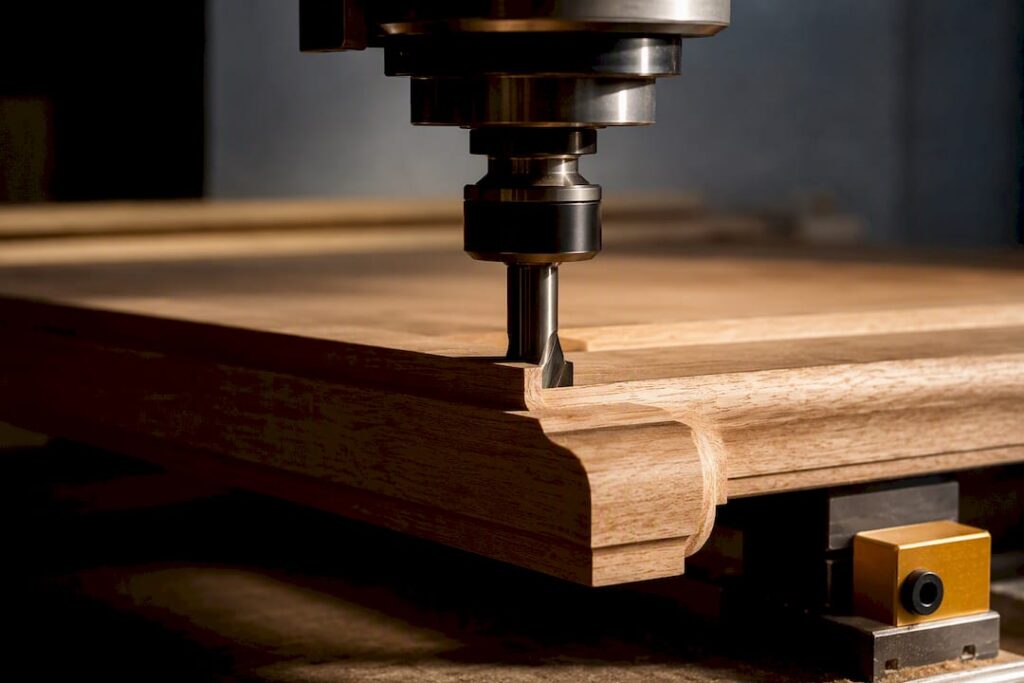
Rail and portal CNC machines suit solid timber doors with deep mortises and stacked tooling; flatbed nesting routers suit panel-based doors and high-mix runs where changeover speed matters most. Either way, buyers should hold suppliers to a high-precision production tolerance commonly needed for ready-to-hang delivery, because that figure separates genuine door machining on CNC from a rough cut that still needs a joiner’s bench. Never accept a machine that requires an operator to bypass interlocks to hit that tolerance. Throughput and flexibility trade off against each other, so match the machine to your actual mix before you match it to your budget.
TL;DR:
Agree the required machining tolerances from your door design, hardware and installation requirements, then verify them on representative sample parts.
Proper machine selection depends heavily on material type, batch size, and required operations, with solid timber suited for rail and portal machines and panels for nesting routers.
Automated features like pallet changers and program recognition systems significantly boost throughput, especially in high-volume, multi-shift operations.
Strict safety controls, including interlocks and guards, are essential; bypassing them can lead to severe injuries and regulatory penalties.
Table of Contents
-
What tooling, fixturing and CAM settings should you specify?
-
How Anderson Group Australia fits into a door production line
Which CNC machine family suits door production?
The right machine depends on what you’re cutting, not just how many doors you need per week. Door CNC programming and machine selection go hand in hand: a rail machine programmed for nesting workflows will fight you every shift, and vice versa.
Rail and portal machines handle solid timber well. Their gantry design gives consistent Z-axis depth control across long door stiles and rails, and they take stacked tooling for repeated mortise and hinge operations without a tool change every cycle. They’re the default for joinery shops cutting entry doors, fire doors with solid cores, and anything requiring deep, clean mortises in dense hardwood.
Flatbed and nesting routers are built for panel-based doors, laminated cores, and shops running high-mix, low-volume jobs. Nesting software packs multiple door blanks or components onto a single sheet, cutting waste and changeover time simultaneously. If your product line includes flush panel doors, MDF cores, or veneered faces, nesting is generally the more economical path.
Turret and multi-head machining centres sit above both for shops running medium-to-high volume. These integrate drilling, routing, and boring into one cell, often with automatic tool change across a dozen or more stations, and they’re where production efficiency stops being a nice-to-have and starts being the business model.
Before shortlisting a machine, work through:
-
Primary material: solid timber, engineered core, or mixed panel stock
-
Typical thickness range and whether doors exceed standard 35mm to 45mm slab depth
-
Batch size: one-off custom orders versus repeat production runs
-
Number of passes required per door (mortise, hinge, lock prep, edge profile)
-
Target daily throughput in finished, ready-to-hang units
Matching tooling strategy to material is not optional. Stacked tooling and rail machines work well on solid timber; nesting and flatbed routers are built for composite panels and MDF, and forcing one machine type to do the other’s job usually shows up as scrap or downtime rather than an obvious failure, as University of Melbourne research on CNC adoption notes.
What operations does a door CNC actually need to perform?
A door isn’t one operation. It’s a sequence, and missing axis capability or tooling reach on any single step means the part comes off the machine unfinished.
-
Mortising for locksets and multipoint hardware, usually requiring consistent Z-depth control to within fractions of a millimetre.
-
Hinge pocket milling, which demands repeatable positioning across every door in a batch, since a hinge pocket 1mm out of position throws off the whole hang.
-
Lock prep, including cross boring and edge boring, often needing side-drilling heads or a 4th axis on thicker slabs.
-
Grooving, for weatherstripping channels and glazing rebates.
-
Rebating, cutting the recess that lets the door sit flush in its frame.
-
Profiling, shaping panel edges, sticking profiles, or decorative detail on the face.
Thicker fire-rated doors or curved-top designs push machines toward 4th or 5th axis capability, particularly for angled lock preps or arched head sections.
Set acceptance tolerances for each operation using the door design, hardware specifications and installation requirements. Verify dimensions and fit on representative parts under agreed production conditions; CNC machining alone does not guarantee that every door will install without adjustment.
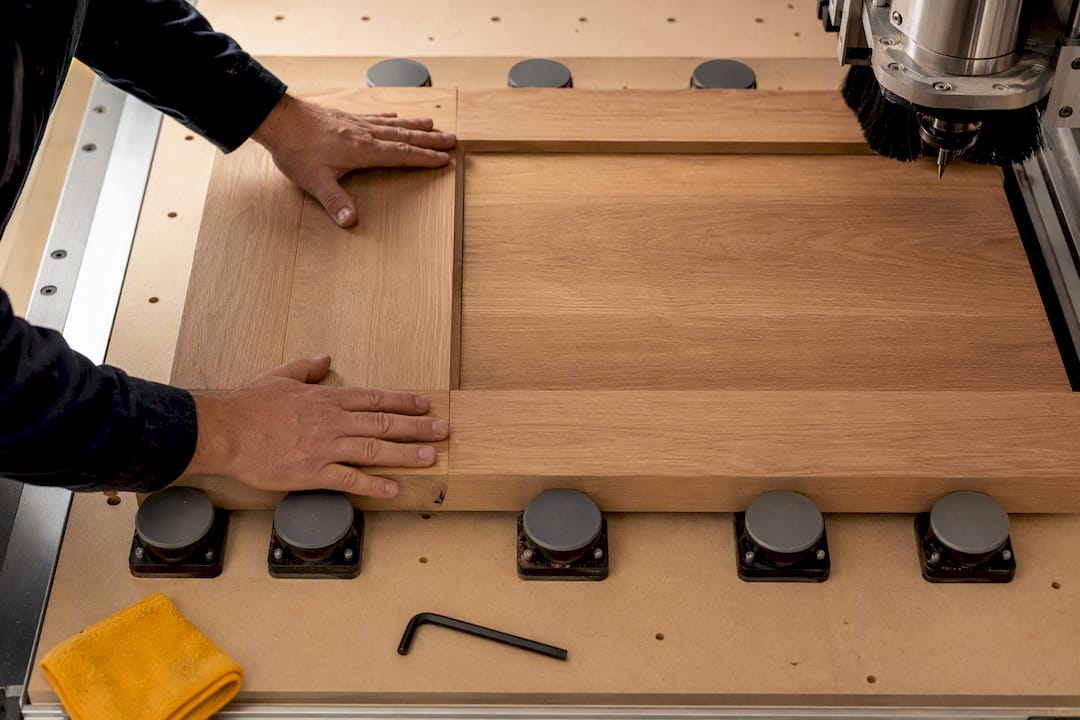
Hitting that tolerance reliably usually means a sacrificial roughing pass followed by a finishing pass, consistent fixturing that doesn’t shift between doors, and vacuum or mechanical hold-down strong enough to resist cutter deflection. Confirm maximum door dimensions and thickness ranges with the vendor before ordering. Some flatbed beds cap out around 1.3m by 2.6m, which matters for oversized pivot or barn-style doors.
How does automation cut door production changeover time?
Changeover time is where most shops lose money without noticing. A machine sitting idle for twenty minutes between model runs adds up across a week faster than most managers expect.
Nested-based manufacturing (NBM) workflows suit shops running many small components across a single sheet, cutting waste on offcuts. Single-part profiling workflows suit longer solid-stock runs where nesting adds complexity without adding value. Knowing which applies to your product mix determines your CAM setup, not the other way around.
Automatic pallet changers (APC) let one pallet load while another machines, cutting dead time between cycles to near zero. Automated tool changers reduce operator intervention for multi-operation parts. QR-code or barcode marking systems, paired with conditional CAM lines, let a machine recognise a part and switch programs automatically rather than waiting on manual reload, a capability that MDPI’s TechnoPORTA research identifies as central to high-efficiency door lines.
-
Manual single-part setups: often a handful of doors per shift once setup and inspection time is factored in
-
Nested panel runs with automated marking: noticeably higher throughput per shift
-
APC-equipped production centres: highest sustained output, limited mainly by material supply and downstream finishing capacity
Pro Tip: Run your CAM conditional logic off hinge count and lock type rather than door model name. It’s a smaller programming change up front and it survives every future model variation without a rewrite.
What safety controls does a door CNC cell require?
CNC routers and machining centres carry entanglement and cut hazards serious enough that SafeWork NSW built a dedicated hazard identification guide around them, covering guarding, interlocks, and risk assessment specifically for routers, CNC routers, and spindle moulders.
The rule that matters most: never operate with doors or guards open, and never bypass an interlock to “just check something quickly.” SafeWork SA’s incident alert documents a severe injury that followed an operator overriding an electrical interlock on automated plant, a reminder that regulators expect hard-wired interlocks and documented inspection by a competent person, not an on-the-fly workaround.
A workable daily checklist covers:
-
Interlock and light curtain function test before first cycle
-
Pressure mat and emergency stop verification
-
Visual inspection of guarding for damage or tampering
-
Lockout/tagout applied before any tooling change or jam clearance
-
Maintenance records updated and signed off, not just filed
Regulators have imposed significant fines and enforcement actions in Australia for interlock bypass incidents. Treat the interlock as non-negotiable equipment, not an obstacle between the operator and the next cycle.
What tooling, fixturing and CAM settings should you specify?
Machine selection, tooling, programming and workholding all affect whether a process holds the tolerances agreed for your door design. Validate the complete setup using representative parts.
-
Cutter selection: solid carbide or diamond-coated cutters for face routing and hinge pockets; longer-reach spiral upcut bits for deep rebates and mortises.
-
Feeds and speeds: Use the machine and tooling manufacturers’ recommendations for the exact material, cutter and cutting depth. Validate the settings in a controlled trial and inspect chip removal, finish and workholding.
-
Cutting direction: climb cutting gives a cleaner edge finish on show faces; conventional cutting is often more stable for rough mortising passes.
-
Fixturing: vacuum tables for panel stock, mechanical clamps for solid timber prone to vacuum leakage through grain, and sacrificial boards underneath every cut to protect the bed and support fibres at breakout points.
-
Stack machining: Consider it only where the machine, tooling and workholding suppliers approve the setup, and verify safety, cutting loads and part quality before production.
-
CAM and post-processor compatibility: confirm the post-processor genuinely matches your controller, and build conditional programming lines that adjust automatically for hinge count and lock type.
Pro Tip: Ask your machine vendor for a sample post-processor file before signing, not after delivery. A mismatched post-processor is the single most common cause of “the machine can do it, but the program can’t” complaints in the first month.
What KPIs prove the machine investment paid off?
Material savings are the easiest number to defend to a finance team, and they’re well documented. Automated, high-precision door lines reduce machining allowances, meaning less timber gets removed as waste margin around the finished part, and MDPI’s TechnoPORTA study shows this translates into materially lower wood consumption and operating cost across integrated production lines.
Track these KPIs from week one of any new line or upgrade:
-
Parts per hour, measured at the ready-to-hang stage, not off the machine
-
First-pass yield: doors that need zero rework
-
Scrap rate as a percentage of material input
-
Changeover time between model or batch switches
-
Labour hours saved per hundred doors produced
Run a short material-savings pilot before committing to a full line change: process a fixed batch on your current setup, then the same batch on the candidate machine, and compare timber consumed per finished door. Tighter tolerances compound beyond the machine floor too, cutting the buffer stock you need to hold against rework and shrinking the labour hours spent on manual fitting. Shops looking to push scrap rates down further can find practical tactics in this shop-floor waste reduction playbook.
How Anderson Group Australia fits into a door production line
Anderson Australia supplies CNC machinery for woodworking manufacturers. Start with its wood machinery range and match the machine to your door materials, dimensions, hardware operations and production volume. For panel-based work, Genesis PLUS is a nesting option to discuss; complex or angled operations require a configuration and tooling review against your drawings.
This equipment is positioned around consistent repeatability and reduced waste across demanding production environments, drawing on continual investment in machine design. For a shop weighing its first automated line, the practical starting point isn’t a full purchase decision. It’s a sample-part trial or an on-site audit against your actual door specs, checked against the wood machinery range to see which class of machine actually fits your mix.
What buyers get wrong when specifying a door CNC
The most common procurement mistake is buying capacity before buying the right machine class. A shop that needs nesting flexibility but buys a rail machine because it looked more capable on paper will spend the next two years fighting the mismatch, a pattern University of Melbourne research flags directly: throughput can stall even with CNC in place if the machine choice doesn’t match the product mix.
Include tooling, CAM configuration, post-processor validation and training in the investment plan. Calculate payback from your own utilisation, labour, material and maintenance assumptions. Start with one door style and material, and measure agreed tolerances and cycle time before scaling.
Get a quote or a demonstration for your door line
Compare the wood machinery range against your actual door production requirements. Confirm machine capability, tooling, workholding, automation options and service support with Anderson Australia before selecting a configuration.
For a machinery enquiry, provide your door drawings, materials, thickness range, required operations and target output. Anderson Australia supplies machinery, servicing and spare parts; it does not provide subcontract cutting or machining. Confirm the availability and scope of any demonstration or application trial directly with the team.
Sources
-
Routers, CNC routers and spindle moulders — hazard identification (SafeWork NSW)
-
Innovative line for door production TechnoPORTA — MDPI Applied Sciences
FAQ
What is the best CNC machine for door making?
There’s no single best machine. It depends on material: rail or portal machines suit solid timber doors with deep mortises, while flatbed nesting routers suit panel-based doors and high-mix production. Turret-style production centres with APC options suit shops running medium-to-high volume across mixed door styles.
Will AI replace CNC machinists?
No. CNC adoption shifts work toward supervision, CAM programming, and path optimisation rather than eliminating the role, according to University of Melbourne research. Skilled machinists remain essential for programming, fixturing decisions, and quality control that automated systems don’t handle alone.
Is CNC machining well paid?
Pay varies by role, experience, and region, but CNC operator roles in Australia sit within a documented salary range reported by industry aggregators. Programming and supervisory roles on automated door lines typically command higher pay than manual operator positions given the added CAM and diagnostic skills required.
Why is it important to never operate a CNC machine with the door open?
Open doors and bypassed interlocks remove the barrier between the operator and moving cutters, spindles, or automated tool changers. SafeWork SA’s incident alert documents a severe injury that resulted from exactly this, and SafeWork NSW guidance treats interlocks as mandatory, not optional, equipment on CNC routers.
What tolerance should I expect for ready-to-hang doors on CNC?
The required tolerance depends on the door design, hardware, material behaviour and installation specification. Agree measurable acceptance criteria with the machine supplier and verify them on representative parts before approving the production process.