
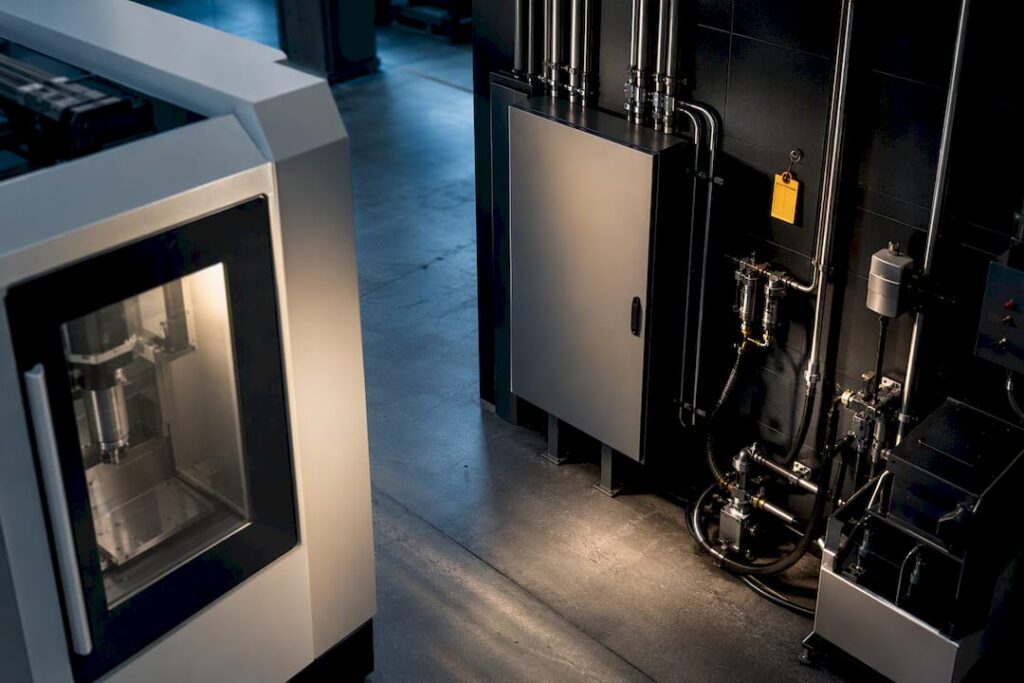
Invoice price is one input among five. CNC machine lifecycle cost is acquisition plus energy, maintenance, tooling, and facility overhead, tracked across the machine’s working life. On CNC turning centres studied in peer-reviewed life cycle cost analysis, acquisition made up only a small share of total spend, with operation, failure, and support costs carrying the rest. Any credible purchase decision needs a multi-year, scenario-based model built on your own utilisation and scrap numbers, not the sales quote alone.
TL;DR:
- Acquisition costs typically account for only 5-15% of total lifecycle expenses, with operation, maintenance, and support dominating long-term costs.
- First-year setup costs, including freight, installation, tooling, and operator training, can add 10-25% to the machine’s purchase price.
- Energy consumption, especially idle power and auxiliary equipment, often exceeds initial estimates, making real-world measurement crucial.
- Tooling and consumables costs depend on actual parts produced and tool life, highlighting the importance of tracking scrap and failure rates separately.
- Effective lifecycle cost management relies on accurate data collection, scenario-based modeling, and operational discipline rather than solely comparing machine specifications.
Table of Contents
- What is CNC machine lifecycle cost, and why does it matter more than the sticker price?
- Acquisition and first-year setup costs
- Recurring operating costs: energy, utilities and facility overhead
- Tooling, consumables and production support costs
- Maintenance, repairs and spare-parts planning
- Depreciation, financing and useful-life assumptions
- ROI, payback and a practical lifecycle-cost modelling approach
- How to reduce lifecycle cost: proven practices and Anderson’s field experience
- Where the real lifecycle cost gets decided
- Model your CNC machine lifecycle cost with Anderson
- Sources
What is CNC machine lifecycle cost, and why does it matter more than the sticker price?
Lifecycle cost, sometimes called total cost of ownership (TCO), is the sum of everything a machine costs from the day it lands on your floor to the day it leaves. Industry frameworks generally define it as acquisition + energy + maintenance + tooling + software + overhead, tracked over a multi-year horizon with sensitivity checks built in.
That framing matters because the purchase order is the easiest number to see and the least representative of what you’ll actually spend. A machine that costs 15% less upfront can easily cost more over eight years if its spindle rebuild interval is shorter or its energy draw is higher under load. Manufacturers who skip this step tend to discover the real cost structure the hard way, usually around the third year, when the first major component fails and the maintenance budget wasn’t built for it.
Acquisition and first-year setup costs
The purchase price sits at the top of the quote, but it’s rarely the number that lands in your bank account. First-year setup costs routinely add 10% to 25% on top of machine price, depending on complexity and site readiness.
Machine price bands vary enormously by capability. Entry-level ATC routers sit well below five-axis machining centres or double-column production platforms, and within any category, options like auto pallet changers, extended travel, or advanced dust collection shift the number again. Anyone comparing quotes across wood and metal applications should compare like-for-like specification, not just headline price.
Beyond the machine itself, budget for:
- Freight, rigging, and crane hire to get the machine from the port or depot onto the shop floor
- Installation and commissioning labour, including levelling, alignment, and control calibration
- Minor facility work — power upgrades, compressed air runs, foundation pads, or extraction ducting
- Initial tooling and fixturing to get the first jobs running, which is separate from ongoing consumable spend
- Operator and programmer training, often underquoted because it’s treated as a formality rather than a line item
The practical move is to ask suppliers for a landed, installed, running cost, not just an ex-works figure. Get commissioning, minor facility work, and initial tooling itemised separately so nothing hides inside a vague “installation” allowance. If a quote doesn’t break these out, ask for it in writing before you sign.
Recurring operating costs: energy, utilities and facility overhead
Energy is the operating cost most buyers underestimate, and it compounds every single shift the machine runs. A dynamic maintenance cost model for machining equipment argues that lifecycle cost models should treat energy, fluid, and maintenance costs as variables tied to actual usage patterns, not fixed percentages applied to purchase price.
Spindle motor draw is the obvious figure, but idle power, compressed air compressors, and coolant pumps often add more than people expect over a full year of running hours. A five-axis machining centre idling between cuts can still pull a meaningful fraction of its full-load current, and if the compressor serving your shop runs continuously to maintain line pressure, that cost gets buried in a general utility bill rather than attributed to the machine that’s actually driving it.
Pro Tip: Clamp an amp meter on the machine’s supply for a week and log idle versus cutting draw separately. Most shops have never actually measured this. They’re working off the nameplate rating, which tells you nothing about real-world consumption.
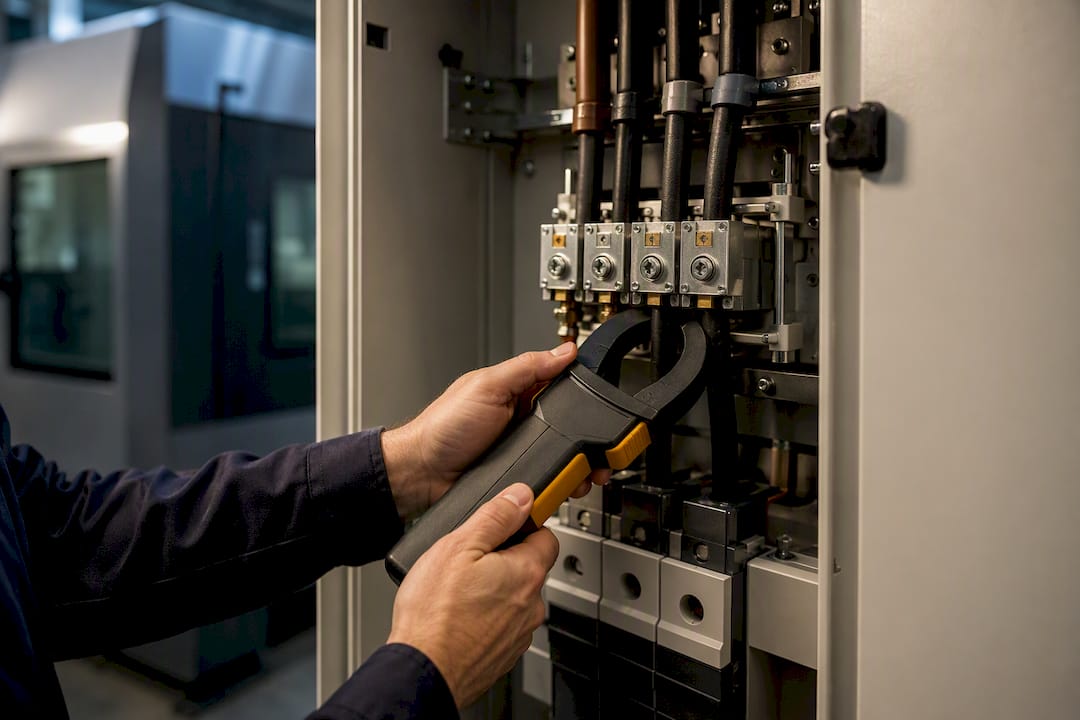
Converting kilowatts into a dollar-per-hour figure is straightforward once you have real numbers:
Facility overhead follows the same logic. Allocate rent, HVAC, and insurance per machine based on floor space occupied and hours run, rather than splitting the site’s total utility bill evenly across every machine on the floor. A five-axis centre with a chiller and extraction running continuously carries a very different overhead load than a router that runs single-shift.
Tooling, consumables and production support costs
Tooling spend scales with parts produced, not with time, which makes it one of the more predictable lines in the model once you have real tool-life data. The calculation is simple in concept: take the cost of a cutter or insert set, divide it by the number of parts it reliably produces before replacement, and you have a per-part tooling cost you can multiply against volume.
Convert that into a dollar-per-hour figure by dividing tool cost by tool life in hours rather than parts, if your job mix varies. Either method works, provided you’re consistent and you’re using real tool-life data rather than the manufacturer’s optimistic estimate.
Beyond cutters and inserts, the consumables line includes:
- Coolant and lubricant purchase, plus disposal costs, which vary a lot depending on coolant chemistry and the metals you’re cutting
- Fixturing wear and replacement, particularly on high-volume repetitive jobs
- Spare tooling inventory carried to avoid stopping production while a replacement insert ships
- Inspection consumables — gauges, probes, calibration standards
Pro Tip: Track scrap and first-article failure rate separately from tool wear. A tool that’s cutting fine but producing parts that fail inspection is a process problem, not a tooling cost, and lumping the two together hides which one you actually need to fix.
Scrap is the multiplier that quietly wrecks otherwise sound lifecycle models. A 3% scrap rate on a high-mix job doesn’t just cost the material. It costs the machine hours, the tooling wear, and the labour that went into producing a part that never ships.
Maintenance, repairs and spare-parts planning
Maintenance budgeting works best at the task level, not as a flat percentage of purchase price. The dynamic maintenance cost approach backs this directly: fixed percentage rules miss the reality that maintenance need tracks usage intensity, not machine age alone.
Build the plan around four layers:
- Routine PM tasks — lubrication, filter changes, way wiper checks, and alignment verification, scheduled monthly and logged against labour hours so you know what PM actually costs your shop.
- Wear-item replacement — ball screws, linear guides, and way covers wear on a usage curve, and the case-study LCCA on a CNC machine tool specifically flags these as the components procurement decisions should be weighed against.
- Spindle rebuild contingency — spindle bearings are typically the single largest unplanned repair cost on any machining centre, and rebuild lead times can run weeks, which is why a spares strategy matters as much as the cash reserve itself.
- Risk-adjusted reserve — set aside a maintenance reserve weighted toward long lead-time components rather than spreading it evenly across every part in the machine.
The shops that get burned aren’t the ones with bad maintenance schedules. They’re the ones who built a reserve for routine wear and got blindsided by a spindle failure that needed a part sitting on a boat for six weeks.
Depreciation, financing and useful-life assumptions
Useful life varies by machine family and, more importantly, by how hard you run it. A router used single-shift for light panel work can outlast a production machining centre running three shifts on hardened tool steel, even if both were bought new in the same year.
Financing structure changes your annual cash position without changing total lifecycle cost. A loan front-loads interest; a lease smooths payments but may carry residual obligations. Model both against your actual cash flow, not just total cost, because a business that’s cash-constrained in year one cares more about monthly outlay than year-eight totals.
A few practical points to lock in before modelling:
- Run at least two depreciation horizons (say, five years and ten years) since the “right” useful life assumption changes the annual number significantly
- Include a realistic end-of-life resale or scrap value rather than assuming zero. Well-maintained machining centres retain real resale value, and ignoring it overstates lifecycle cost
- Revisit useful-life assumptions annually against actual hours run, not the calendar
ROI, payback and a practical lifecycle-cost modelling approach
The TCO formula from the connected TCO framework is deliberately simple: acquisition plus energy plus maintenance plus tooling plus software plus overhead, run across a multi-year cash-flow horizon rather than a single-year snapshot.
Run three scenarios, not one. Practical shop-level guidance recommends conservative, base, and optimistic cases built around different utilisation and scrap assumptions, validated against actual spindle-run data rather than rostered shift hours.
A worked example, kept deliberately simple for audit purposes:
- Machine landed cost including installation and initial tooling
- Annual operating cost (energy, consumables, maintenance reserve)
- Annual labour allocated to the machine
- Annual revenue attributable to parts produced
- Net annual contribution
- Simple payback period before financing and tax effects
That last line is where most shop-floor models stop, and it’s exactly where they should keep going. Simple payback calculators don’t account for financing interest, tax treatment, or depreciation schedules, so treat that 4.3-year figure as a sanity check, then hand the model to an accountant for the version that actually informs a capital decision.
Before running any of this, collect: 90 days of spindle-run hours (not shift hours), current tooling spend by job type, actual scrap rate, energy bills isolated by circuit where possible, and your existing maintenance labour hours.
How to reduce lifecycle cost: proven practices and Anderson’s field experience
Lifecycle cost isn’t fixed once you sign the purchase order. It’s shaped by what you do in years two through ten, and the biggest gains usually come from unglamorous operational discipline rather than a different machine.
- Tool-life monitoring using controller data catches wear trends before they turn into scrap or broken tooling, and Anderson’s own field notes on controller-data tool-life monitoring cover how shops apply this in practice.
- Structured uptime programmes recover machine hours that otherwise leak away to changeovers and unplanned stops. Anderson’s 90-day uptime playbook walks through the recovery process shift by shift.
- Deliberate spare-parts strategy for long lead-time items, paired with proper operator training, does more for lifecycle cost than any single hardware upgrade.
Where the real lifecycle cost gets decided
Most of the modelling in this article isn’t complicated, but it does require discipline most shops skip because the invoice price is right there in front of you and the energy bill, the scrap rate, and the spindle rebuild are three years away. That’s the actual failure mode. Not bad arithmetic, but a refusal to look past the number on the quote.
The conventional advice tells buyers to compare machine specifications and negotiate price. That’s fine as far as it goes, but it treats acquisition as the decision when the case-study evidence says operation and failure costs carry the majority of lifetime spend. Specification comparisons matter far less than an honest utilisation forecast and a maintenance reserve sized against your actual wear components.
If there’s one thing worth prioritising above everything else in this article, it’s measurement before modelling. A spreadsheet full of assumptions is worse than no spreadsheet at all, because it creates false confidence. Get 30 days of real spindle-run data, real tooling spend, and a real scrap rate before you build anything. The model is only as good as the inputs, and most shops have never actually measured the inputs.
— Scott
Model your CNC machine lifecycle cost with Anderson
Running the numbers above shows why the machine that fits your actual production profile beats the machine with the lowest sticker price almost every time. Anderson has spent decades building CNC platforms for furniture and cabinetry, automotive, and general engineering shops where lifecycle cost, not headline price, decides whether an investment pays off. If your volume and mix suit a nesting platform, the Genesis PLUS nesting CNC machine is worth modelling against your own utilisation figures, and shops running heavier production cycles should look at the production machining centre with auto pallet changer for the throughput gains an APC delivers against labour cost. Talk to a knowledgeable CNC machinery team with your utilisation and scrap numbers in hand, and get a lifecycle cost comparison built around your actual shop, not a generic spec sheet.
Sources
The CNC machine tool LCCA case study and the dynamic maintenance cost model are the two peer-reviewed frameworks behind this article’s cost structure. For fast first-pass numbers, the connected TCO guide and the CNC ROI calculator are useful starting points, provided you follow up with an accountant-reviewed model before committing capital. For readers weighing local purchase against offshore sourcing, this Australian CNC machining cost comparison covers the trade-offs worth factoring into total cost.
- Life cycle cost analysis of a computerized numerical control machine tool: a case study
- Machining equipment life cycle costing model with dynamic maintenance cost
- Connected TCO analysis