
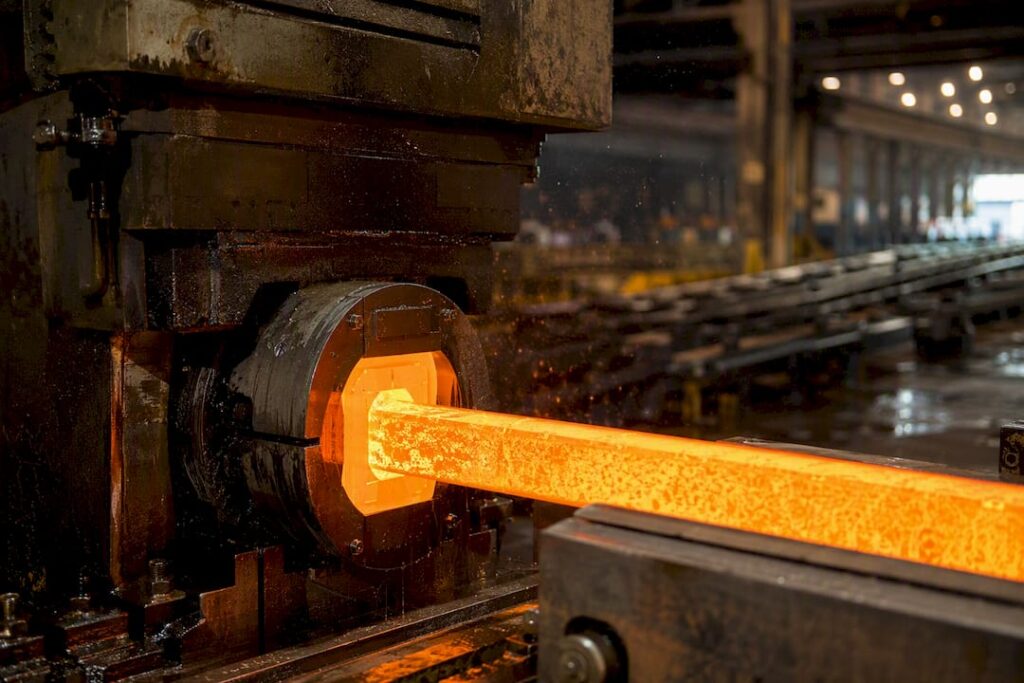
Aluminium extrusion machining is the combined workflow of pushing aluminium billet through a shaped die and then applying CNC secondary operations to add the holes, threads, slots and precision faces the die alone cannot form. It’s the standard route to high-tolerance profiles at production volume, and it works because the two processes solve different problems: extrusion gives you cross-sectional shape cheaply and repeatably, CNC gives you the tight, localised features.
Billet is typically heated to temperatures generally between moderate and high heating ranges before pressing, tempers like T5 and T6 govern how the material cuts afterward, and a well-equipped machining centre will hold tolerances around ±0.02 mm on critical features.
Machining becomes essential, not optional, when a part needs:
-
Threaded holes, counterbores, or precision mating faces that a die simply cannot produce to the required accuracy.
-
Internal features, cross-drilled holes, or flatness on mounting surfaces beyond what extrusion tolerances allow.
Key Takeaways
Aluminium extrusion machining works because extrusion delivers accurate cross-sectional shape cheaply while CNC secondary operations add the tight-tolerance features a die cannot form.
| Point | Details |
|---|---|
| Sequence matters | Machine only after cooling, straightening, and ageing to final temper, not before. |
| Temper drives cutting parameters | Specify T5 or T6 upfront so suppliers can set correct speeds and tooling. |
| Match tolerance to process | Reserve tight tolerances (±0.02 mm) for CNC features, not die-formed surfaces. |
| Fixturing reduces error | Single-setup multi-axis machining cuts alignment drift across long profiles. |
| Anderson supports this workflow | Its multi-axis metalworking centres, including AXXIOM, are built for long-profile aluminium production. |
Table of Contents
-
How does the extrusion machining process work from billet to finished part?
-
What CNC operations are commonly applied to aluminium extrusions?
-
What machine capabilities should you require from a supplier?
-
How do you design extruded parts for cost-effective machining?
-
How does modern CNC equipment handle demanding extrusion features?
-
What should you ask before placing an aluminium extrusion machining order?
-
Get the right machining centre for your aluminium extrusion work
How does the extrusion machining process work from billet to finished part?
The short version: billet gets heated, pressed through a die, cooled and straightened, aged to the target temper, then handed to CNC for the features the die couldn’t produce. Getting the sequencing right is what separates a smooth production run from a scheduling headache.
Aluminium billet is heated to roughly 375°C to 500°C, then pushed through a steel die using hydraulic presses rated anywhere from about 100 to 15,000 tons of force, depending on profile size and alloy. Hydro’s own description of the process notes hot extrusion temperatures around 750–925°F (roughly 400–495°C), followed by cooling, stretching to straighten the profile, and ageing to reach the specified temper. Machining only happens after that ageing step, because cutting a profile before it reaches final hardness changes how it responds to tooling and can distort dimensions later.
| Process stage | Typical range or note |
|---|---|
| Billet heating | 375–500°C |
| Press force | 100–15,000 tons |
| Post extrusion | Cooling, stretch straightening, ageing to T5/T6 |
| Secondary machining | Scheduled after ageing, before or after anodising |
Machining is mandatory for threads, cross-holes, and mating faces. It’s optional for simple straight cuts, chamfers already achievable within die tolerance, or profiles used as-extruded in non-critical structural roles. Lead times vary by die availability and order volume, but expect extrusion runs to be scheduled around die lead time first, with CNC cycle time added once profiles have aged and cooled.
What CNC operations are commonly applied to aluminium extrusions?
Milling, face machining, drilling, tapping or thread milling, slotting, counterboring, chamfering, and increasingly 5-axis contouring on complex brackets and structural members. Which combination you specify depends on how many faces of the profile need work and how tight the positional tolerances are.
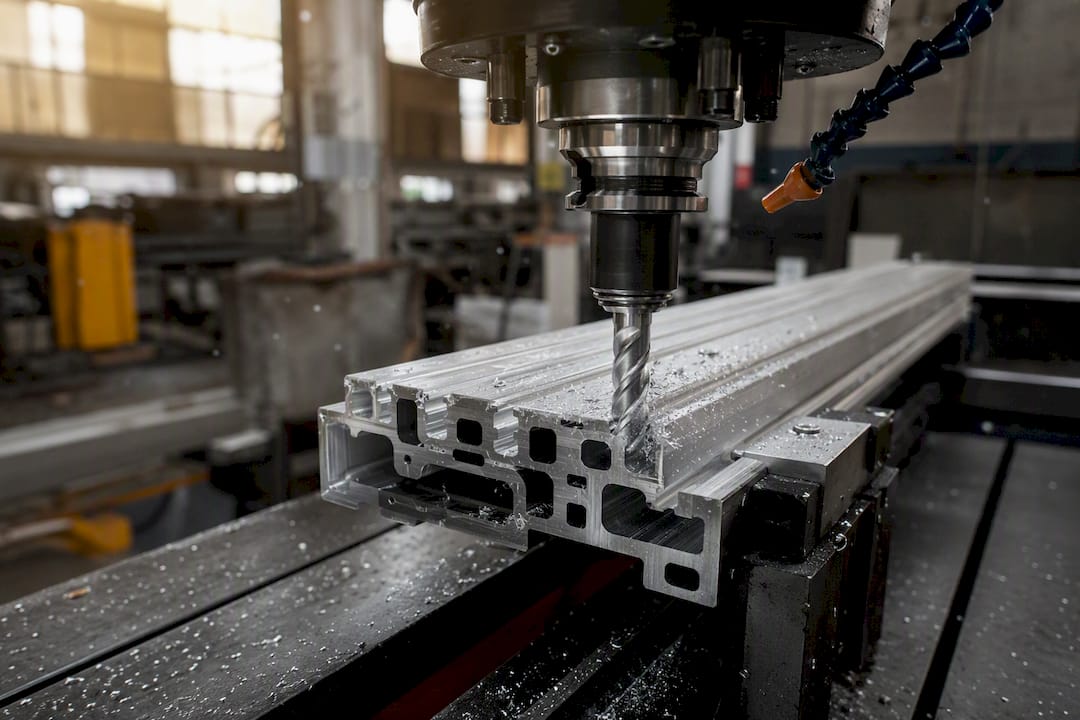
On long profiles, the biggest practical challenge isn’t the cutting itself, it’s holding the part still and square across multiple operations. Shops handle this with multi-station fixturing that indexes the extrusion through several work zones in one pass, or with a single 5-axis setup that reaches most faces without unclamping. Facilities running high-speed spindles, some up to 24,000 RPM, pair that speed with polished carbide end mills and positive rake geometry to keep built-up edge down and surface finish clean, since soft aluminium tends to gum up tooling that isn’t suited to it.
Thread milling has largely replaced straight tapping on thin-walled extrusion sections, because it puts less radial load on the wall and reduces the risk of stripped or cracked threads. Tapping still earns its place on thicker, solid sections where cycle time matters more than wall stress.
Tolerance expectations vary by operation: face milling and drilled hole positions commonly hold ±0.05 to ±0.1 mm, while critical bore or thread locations on integrated production lines are quoted as tight as ±0.01 to ±0.02 mm. Inspection should focus on hole position and flatness right after the first operation, not just at final part sign-off, because errors compound across a multi-feature profile.
-
Milling and face machining: flatten mounting surfaces and clean up extrusion die lines.
-
Drilling and tapping/thread milling: add fastener points, often the highest-scrutiny features on the print.
-
Slotting, counterboring, chamfering: usually lower risk, but still need consistent depth control across long runs.
Pro Tip: Where the print allows it, specify single-setup multi-axis fixturing rather than sequential re-clamping. Every re-fixture introduces a small alignment error, and on a two-metre profile that error shows up as a real positional shift by the time you reach the far end.
Which aluminium alloys and tempers machine best?
6005A, 6061, 6063, and 6082 cover most structural and machined extrusion work, and the temper you specify, usually T5 or T6, has more effect on machinability than most buyers expect.
The Aluminium Australia extrusion manual recommends 6005A, 6061, 6351, and 6082 for general-purpose extrusion and machining, and notes that softer alloys cut cleanly with larger tool rake angles and lighter cuts. Harder tempers resist tool wear better but demand slower cutting speeds and tougher coated tooling to avoid premature edge failure, a point industry machinability guidance makes clear when comparing T5 against T6 finishes on the same alloy.
Quick rules worth applying at the spec stage:
-
6063 in T5 is the easiest to machine and finishes well, but it’s softer and less suited to high-load fasteners.
-
6061 and 6082 in T6 machine well with sharp carbide tooling and hold threads better under load.
-
Always confirm temper with your extruder before machining, not after, since heat-treat cycles affect cutting speed and coolant strategy.
What machine capabilities should you require from a supplier?
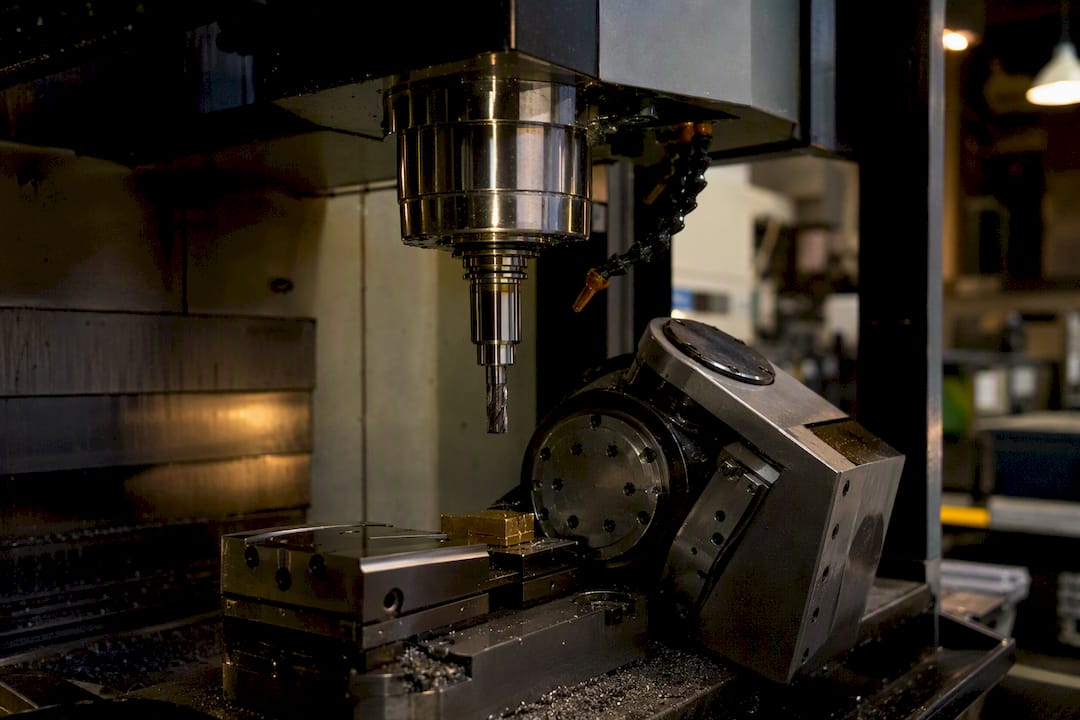
Specify axis count, spindle power and speed, work envelope length, and automated part handling before anything else, because these four factors determine whether a supplier can actually hit your tolerances at the volume you need.
| Capability | Typical range |
|---|---|
| Axis configuration | 3-axis for simple faces, 4/5-axis for complex or angled features |
| Spindle speed | Up to 24,000 RPM on high-speed aluminium-focused lines |
| Positional accuracy | 0.01 to 0.1 mm depending on setup and profile length |
| Work envelope | Varies by machine; long-profile capable centres handle several metres in one pass |
Assess profile length, support, travel, clamping and access to the required faces against the exact machine configuration. Verify dimensional capability through agreed trials rather than assuming it from the number of axes.
When you’re evaluating a supplier, ask for:
-
An auto pallet changer or multi-station fixturing for repeatable long-run positioning.
-
In-process probing or CMM verification, not just end-of-run spot checks.
-
Chip evacuation and flood or mist coolant suited to aluminium, since poor chip control drives most surface defects on soft alloy.
How do you design extruded parts for cost-effective machining?
Decide early which surfaces the die will form and which the CNC will finish, because that single choice drives most of the downstream cost and lead time.
Start with datum faces. Pick them on surfaces the die naturally produces flat and consistent, so machining references something stable rather than a warped or twisted section. Avoid designing features that force a part through three or four separate setups when a smarter datum choice could do it in one. Hollow profiles made with porthole or bridge dies carry structural weld planes inside the section, so keep critical threaded features off those lines, or compensate the toolpath for the local hardness difference.
A short checklist worth running against every new drawing:
-
Confirm which tolerances the die can realistically hold versus which need CNC finishing.
-
Specify datum faces that survive extrusion straight and flat.
-
Avoid multi-setup features unless the part genuinely requires them.
-
Keep thread locations clear of weld planes on hollow sections.
-
Only request tighter-than-standard die tolerances when the part cannot function without them, since tighter extrusion tolerances shift cost from machining into die tooling and press time.
-
Wall thickness choices affect both extrudability and how much clamping force machining fixtures can safely apply.
-
Extrusion tolerances typically run wider than machined tolerances; budget CNC finishing wherever the print calls for anything tighter than the die’s natural capability.
How does modern CNC equipment handle demanding extrusion features?
Multi-axis machining centres with integrated automation cut the number of setups a long profile needs, and fewer setups means fewer chances for alignment drift on critical features.
-
Production-scale centres with automatic pallet changing keep throughput steady across long runs without manual re-fixturing between parts.
-
5-axis platforms reach angled faces and complex brackets in one clamping, which matters most on profiles with features on more than two sides.
-
Rigid spindles and modern chip evacuation reduce the surface defects that soft aluminium is prone to under aggressive cutting.
Fewer setups and tighter alignment translate directly into less scrap and steadier cycle times on production runs.
Reducing a five-setup job to a single 5-axis clamping doesn’t just save time. It removes four separate opportunities for the part to shift out of tolerance before the last feature is even cut.
What should you ask before placing an aluminium extrusion machining order?
Ask for the drawing, the specified alloy and temper, and the inspection criteria before quoting starts, because guessing on any of those three drives rework later.
After-sales support and machine servicing matter just as much as the initial spec sheet, since a machining centre that’s down for a week costs more than the tolerance debate ever did.
Get the right machining centre for your aluminium extrusion work
Ask Anderson Australia which machine configuration suits the profile length, material, operations and accuracy requirements. Verify travel, workholding and tooling compatibility for the actual application.
If your parts need multi-station fixturing, 5-axis reach, or automated pallet handling to hit the tolerances discussed above, Anderson’s metalworking CNC range covers the spindle speeds, axis configurations, and automation options that keep long extrusion runs in spec. For technical partner reading on material selection trade-offs, Machining Technologies’ guide to CNC materials is worth a look alongside your own spec sheet. Get in touch to talk through your drawing, alloy, and tolerance requirements, and find out which machine line fits your production volume.
Frequently asked questions
What is aluminium extrusion machining exactly? It’s the combined process of forming aluminium profiles through a die and then applying CNC operations, drilling, tapping, milling, to add features the extrusion process itself cannot produce accurately.
Which aluminium temper is easiest to machine? T5 tempers generally cut more easily than T6, since T6’s higher hardness increases tool wear and requires slower cutting speeds and tougher tooling.
Can you machine extrusions before they’re aged? It’s not recommended. Machining before ageing means cutting a part that hasn’t reached its final hardness, which can distort dimensions once ageing is complete.
What tolerance can CNC machining hold on an aluminium extrusion? Well-equipped machining centres commonly hold ±0.05 to ±0.1 mm on general features, with critical bores or threads on integrated production lines reaching as tight as ±0.01 to ±0.02 mm.
Do all extruded profiles need secondary machining? No. Simple structural sections used as-extruded often skip machining entirely; it becomes necessary once the part needs threads, precision holes, or mating faces beyond die tolerance.