
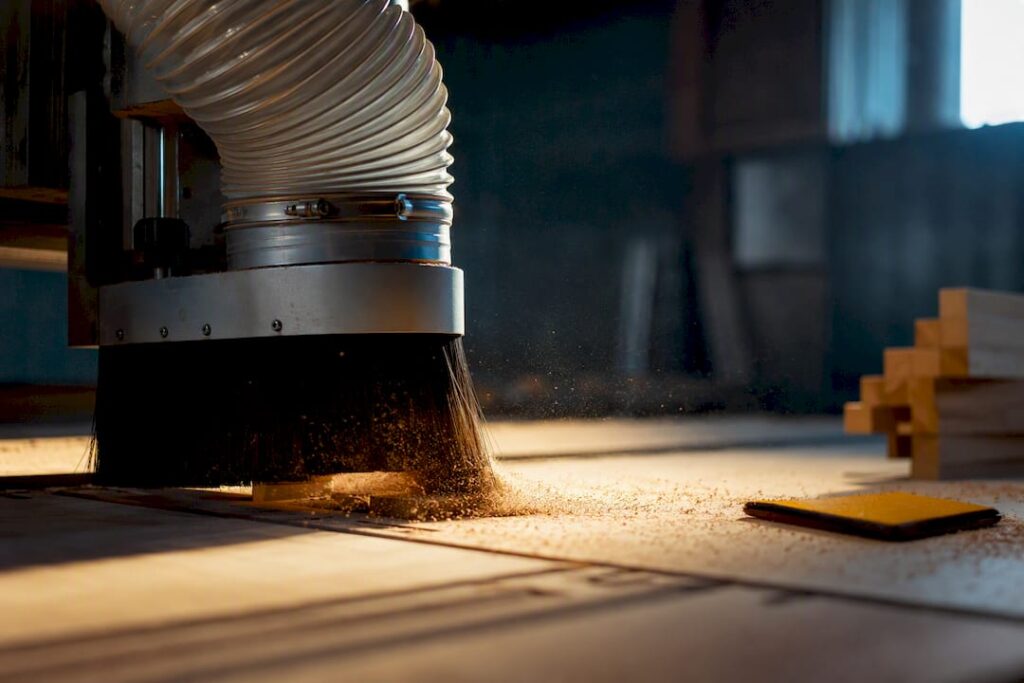
Australia sets exposure standards for certain hardwood dusts at low levels around 1 mg/m³ and softwood dusts at higher levels around 5 mg/m³ for an 8‑hour TWA, with some species also having a short‑term exposure limit (STEL). Where any hardwood is present in a mixed dust stream, the hardwood limit applies. Employers must eliminate or minimise exposure so far as is reasonably practicable, working through the hierarchy of control and referencing AS 3640 for sampling and AS/NZS 1715/1716 for respiratory protection.
TL;DR:
- The hardwood dust exposure limit is set at 1 mg/m³ over an 8-hour shift, applicable even in mixed dust streams with softwood.
- Regular sampling using inhalable samplers per AS 3640 and prompt investigation of exceedances are critical to maintaining compliance.
- The hierarchy of control prioritizes substitution, enclosure, and engineering controls before relying on personal protective equipment.
- Maintaining ductwork, filters, and capturing performance is essential, as leaks and clogged filters can silently increase dust levels over time.
- Employers must document exposure monitoring, equipment maintenance, and staff training to demonstrate compliance and reduce health risks.
Table of Contents
- Who sets Australia’s wood dust exposure guidelines?
- Why does hardwood dust carry a lower exposure limit?
- What are the exact exposure limits and sampling standards?
- How should you monitor and sample wood dust exposure?
- What control measures actually reduce wood dust exposure?
- What are employer duties under Australia’s wood dust regulations?
- How do you build a compliance checklist for wood dust?
- What should you check on extraction systems in a CNC workshop?
- What should WHS managers prioritise on wood dust control?
- Get help integrating CNC machinery with dust extraction
- Sources
Who sets Australia’s wood dust exposure guidelines?
Safe Work Australia maintains the national workplace exposure limits (WEL), the current terminology replacing the older “exposure standard” (WES) language used in earlier codes. Don’t be thrown by seeing both terms in older documents. They describe the same regulatory concept.
A WEL is expressed as a time‑weighted average (TWA) over an 8‑hour shift, measured in milligrams per cubic metre (mg/m³) of the inhalable dust fraction. Some substances also carry a STEL, a ceiling that applies over a 15‑minute reference period to catch short, intense bursts of exposure that an 8‑hour average would smooth over.
For wood dust specifically, cross‑check the national WEL figures against the Hazardous Substances Information System (HSIS) and your state regulator’s own guidance. WorkSafe Victoria and SafeWork NSW both publish practical fact sheets that translate the WEL into workshop‑level advice.
Why does hardwood dust carry a lower exposure limit?
Certain hardwood dusts sit in the International Agency for Research on Cancer’s Group 1 category, meaning there’s sufficient evidence linking them to cancer in humans. The specific concern is adenocarcinoma of the nasal cavity and sinuses, a rare but well‑documented occupational cancer tied directly to inhaled wood dust particles lodging in the nasal passages over years of exposure.
That’s the reason the hardwood limit is considerably lower than the softwood figure.
Softwoods present a different but still serious problem: sensitisation and occupational asthma, often worsened by formaldehyde released from resins in pressed and engineered wood products. Watch for persistent coughing, wheezing, skin irritation, or eye and nasal irritation in anyone working regularly around timber dust. These symptoms are the practical trigger for health surveillance, and Cancer Council Australia recommends elimination or strong engineering controls precisely because the cancer risk from hardwood dust builds silently over long exposure periods.
What are the exact exposure limits and sampling standards?
The numbers are non‑negotiable once you know which timber you’re cutting. Certain hardwood dusts are capped at 1 mg/m³ as an 8‑hour TWA. Softwood dusts sit at 5 mg/m³ as an 8‑hour TWA, with STELs published for some specific substances. If your dust stream includes any hardwood at all, even mixed with softwood, the hardwood limit governs the whole mix.
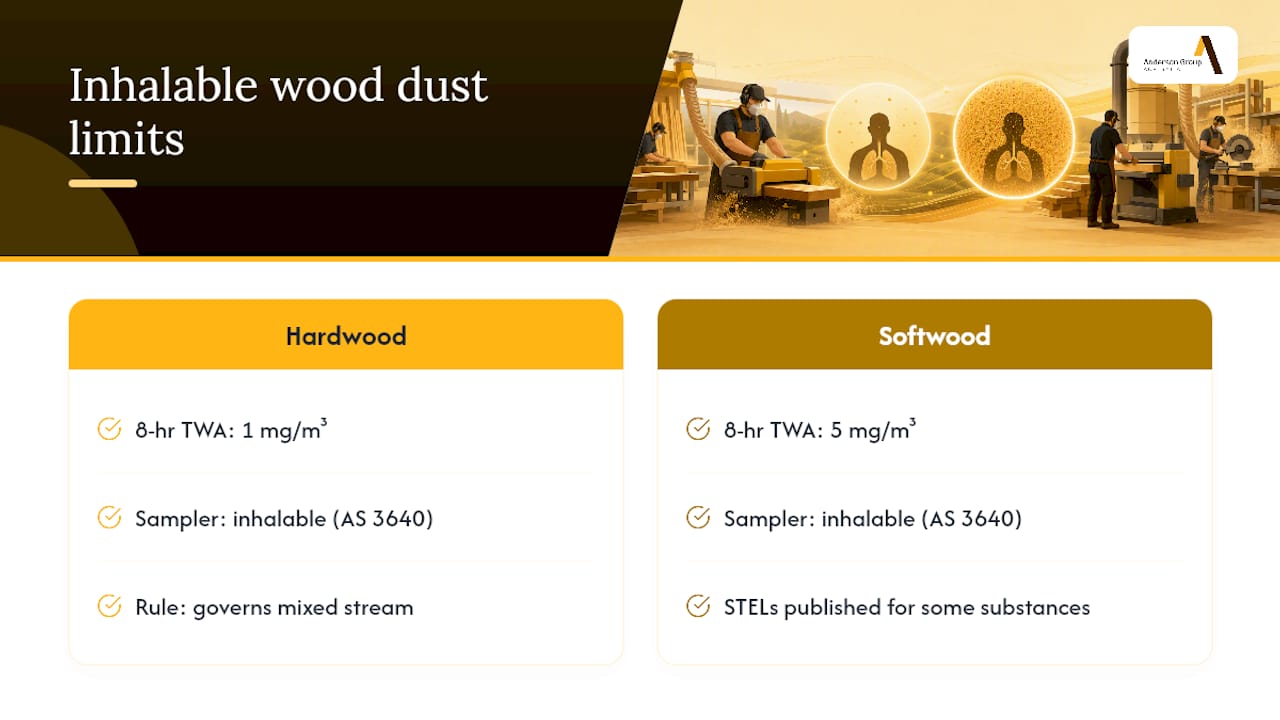
AS 3640 governs how you sample airborne wood dust for compliance testing, and it specifically calls for inhalable fraction sampling using devices like IOM or button samplers, not the respirable cyclones used for silica or other fine‑particle hazards. That distinction matters because the larger particles captured by an inhalable sampler are the ones depositing in the nasal passages and driving sinonasal cancer risk. A respirable‑only result will understate your actual exposure.
Where respiratory protective equipment (RPE) is needed, AS/NZS 1715 covers selection, use and maintenance, while AS/NZS 1716 sets the performance requirements for the respirators themselves. Fit testing against these standards isn’t optional if RPE forms part of your control plan.
How should you monitor and sample wood dust exposure?
Monitor when there’s a plausible risk of exceeding the WEL, after any process change, new machinery installation, or a change in timber species being processed. A qualified occupational hygienist should conduct personal sampling, clipping an inhalable sampler in the worker’s breathing zone rather than relying on fixed area monitors, which tend to underestimate what an operator actually breathes.
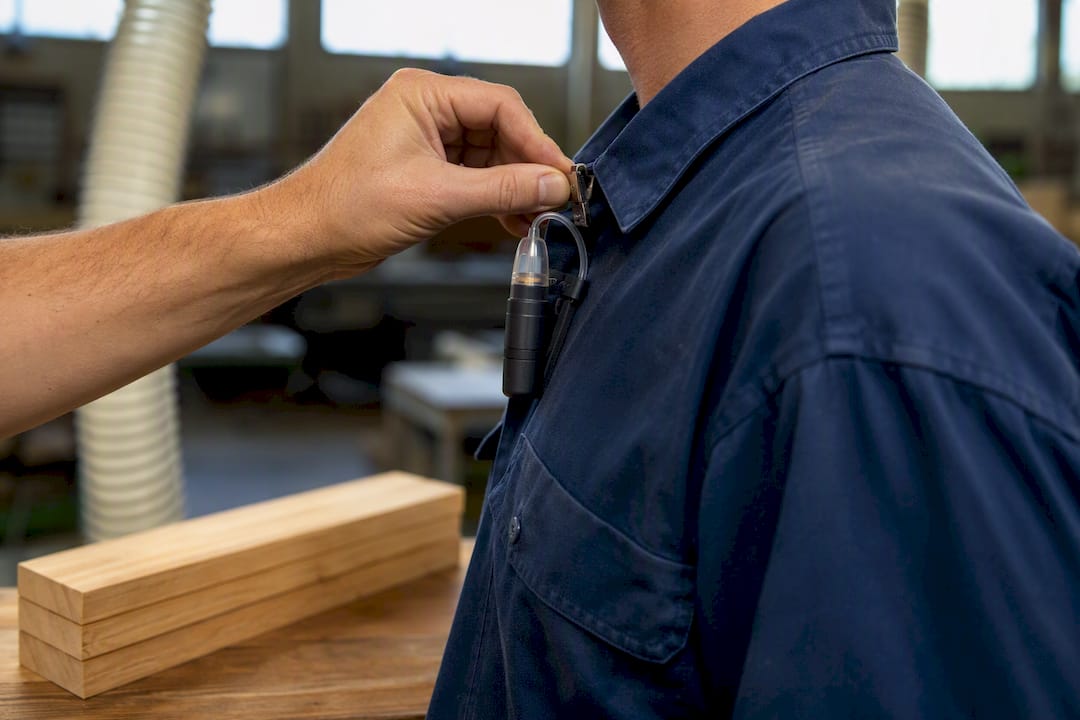
Following AS 3640 procedure matters more than people assume. Get the sampler position, flow rate, and duration wrong and the result is meaningless regardless of the lab’s accuracy.
Resample after any maintenance issue affecting extraction, after modifying local exhaust ventilation (LEV) ductwork, or on a routine schedule if your process runs close to the limit. A single passing test isn’t proof of ongoing compliance. Extraction systems degrade, filters clog, and ducting can loosen or leak over months of operation, which is why monitoring works best as a programme, not a one‑off event.
If a result exceeds the WEL, don’t wait for the next scheduled review. Investigate the source immediately, check extraction performance, and consider interim RPE while you fix the underlying control.
What control measures actually reduce wood dust exposure?
The hierarchy of control isn’t a checklist you tick off once. It’s the order you should genuinely try things in, starting with the option that removes the hazard rather than manages it.
- Substitution and design: choose processes or panel products that generate less fine dust, and design cutting sequences to minimise unnecessary machining passes.
- Isolation and automation: enclose dust‑generating processes and integrate CNC operations with automated material handling so operators aren’t standing in the dust plume.
- Engineering controls: fit LEV at the point of dust generation, size dust collectors correctly, and specify HEPA or H/M‑class filtration for housekeeping vacuums.
- Administrative controls: rotate tasks, train staff on dust‑generating activities, and ban compressed air for clearing dust and surfaces, since it aerosolises settled particles straight back into the breathing zone.
- RPE as the last resort: only after the controls above are exhausted, and only with proper AS/NZS 1715/1716 fit testing and maintenance.
Pro Tip: Check your dust collector’s filter class before assuming it’s protecting anyone. A collector rated for coarse chip capture won’t touch the fine inhalable fraction that actually drives exposure readings, so match filtration to the particle size you’re worried about, not just the visible sawdust.
What are employer duties under Australia’s wood dust regulations?
Model WHS laws (and the equivalent OHS framework in Victoria) place a clear duty on employers: eliminate the risk where reasonably practicable, or minimise it so far as reasonably practicable if elimination isn’t achievable. That phrase, “so far as is reasonably practicable,” gets tested hard in enforcement action, and inspectors expect to see evidence, not intentions.
Keep records of exposure monitoring results, LEV maintenance logs, RPE fit test certificates, staff training records, and any health surveillance conducted. WorkSafe Victoria and SafeWork NSW both cite these as the documents inspectors ask for first during a site visit.
Note that WEL figures and implementation guidance get periodically revised, most recently through Safe Work Australia’s updated workplace exposure limits documentation. Jurisdictional guidance can vary slightly in emphasis even where the underlying WEL number is national, so check your state regulator’s current fact sheet rather than relying on a document downloaded years ago.
How do you build a compliance checklist for wood dust?
Turning the regulations into action doesn’t need to be complicated. Work through this in order:
- Identify wood types and dust‑generating tasks across your site, noting where hardwood and softwood streams mix.
- Commission inhalable personal sampling under AS 3640 wherever there’s a plausible risk of exceeding the WEL.
- Check and maintain LEV and dust extraction, including filter condition, ducting integrity, and capture velocity at the hood.
- Schedule regular cleaning using HEPA‑filtered vacuums, not brooms or compressed air.
- Train staff and fit‑test RPE for anyone whose role still carries residual exposure after engineering controls.
- Plan follow‑up monitoring and health surveillance proportional to the exposure level identified, with tighter review cycles for hardwood processing.
What should you check on extraction systems in a CNC workshop?
Extraction performance lives or dies on details most operators never inspect. Capture velocity at the hood, hood placement relative to the cutting point, static pressure through the ductwork, and filter change intervals are the four checks worth running on a fixed schedule.
The most common failure point isn’t the collector unit itself. It’s ductwork leaks and clogged filters quietly reducing airflow over months, long before anyone notices a visible dust problem. Monitoring differential pressure across filters gives you an early warning that’s far cheaper than waiting for an exceedance result.
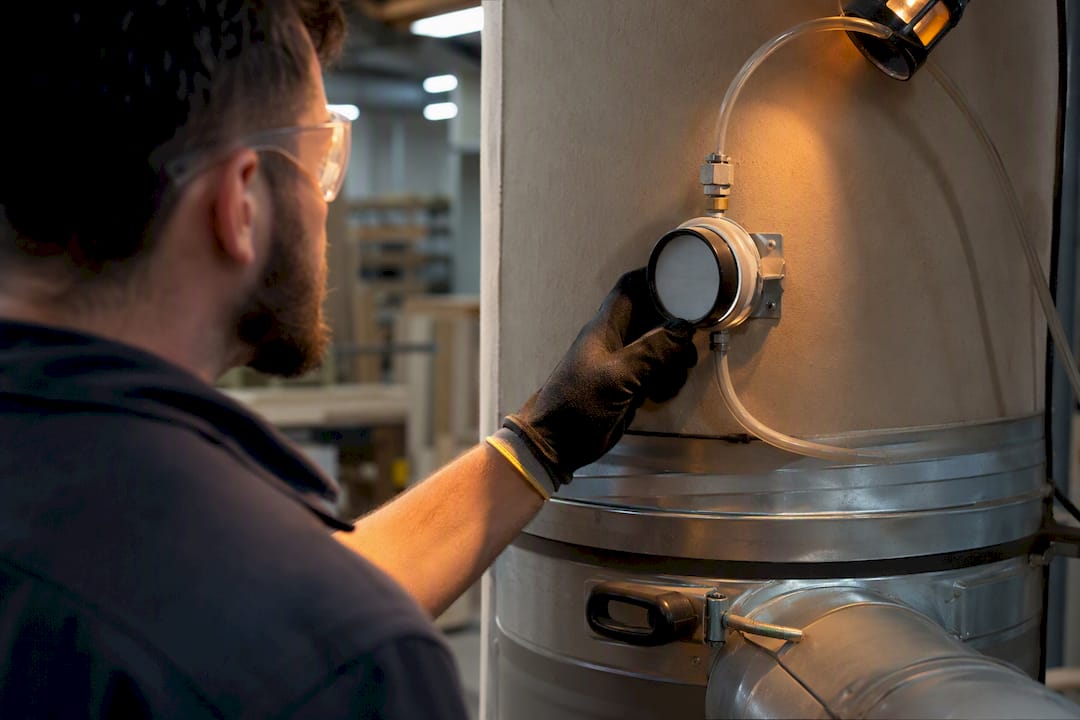
When integrating CNC dust collection with existing plant extraction, commissioning airflow tests at handover matters as much as the equipment specification itself. A machine that performs perfectly on the manufacturer’s test floor can underperform badly if the site’s ductwork wasn’t sized for the added load.
What should WHS managers prioritise on wood dust control?
Most sites already own the equipment they need to comply. What’s missing is the maintenance rhythm and the monitoring cadence that keeps that equipment performing at the level it was designed for. A filter nobody’s checked in a year is a compliance gap wearing the disguise of a working dust collector.
Bring in an occupational hygienist and an equipment integrator early, before you’re troubleshooting an exceedance under pressure. Getting the extraction design right at installation costs far less than retrofitting it after a failed test.
— Scott
Get help integrating CNC machinery with dust extraction
Our company has long experience building CNC machinery for furniture, cabinetry and manufacturing operations, with dust control considered an integral aspect rather than an afterthought.

Getting the exposure numbers right on paper is one thing. Getting a machine, its extraction ductwork, and your existing plant collector all working together at the airflow you actually need is a different problem entirely, and it’s where a lot of otherwise solid control plans quietly fail. Anderson’s woodwork CNC machinery range is built with integration in mind, and our team can talk through extraction requirements alongside machine specification rather than treating them as separate purchases. If you’re planning a new install or reviewing an existing setup that isn’t holding its numbers, get in touch to discuss a machine and extraction assessment for your site.
This article is general information, not a substitute for advice from a qualified doctor. Consult a qualified healthcare professional about your own circumstances before acting on anything here.
Sources
- WorkSafe Victoria — Wood dust health hazards and control
- SafeWork NSW — Wood dust: health hazards and control (fact sheet)
- Occupational Hygiene — Wood dust monitoring and control in Australian workplaces
- Cancer Council Australia — Occupational cancer risk series: wood products