
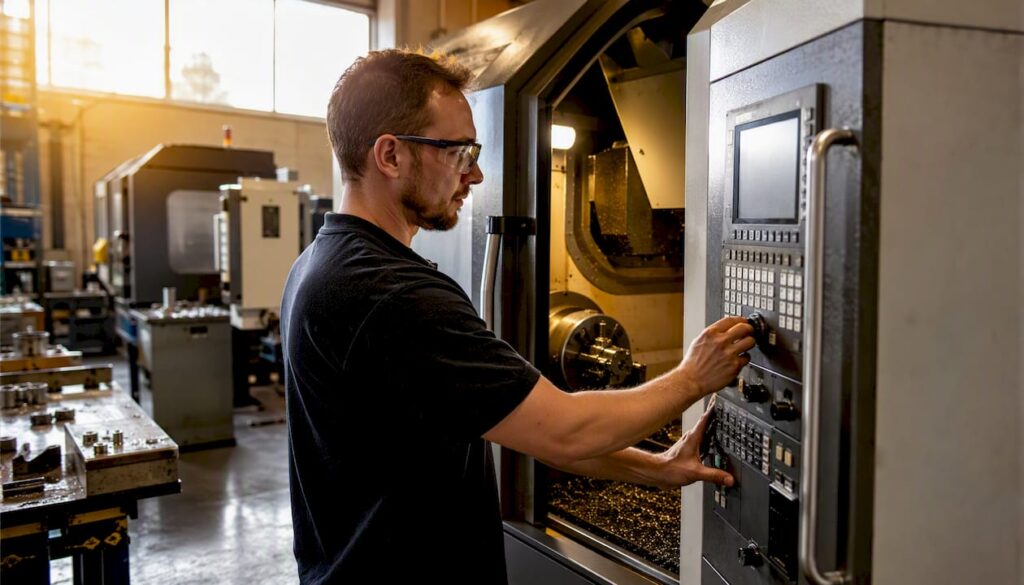
For most Australian manufacturers, the shortlist starts here: the AXXIOM 5-Axis series and STRATOS machining centre for precision production work, the MASS-5 and MASS-B for large-format parts, the VMC-1100/1250/1400 verticals for high accuracy metalwork, and the Genesis PLUS and MAXXIS 5-Axis for nesting and complex surface work. Your immediate next step is to request a machine demonstration alongside the factory acceptance test (FAT) documentation and written confirmation of an Australian-based service commitment. These three things together tell you more about a supplier’s real capability than any brochure.
Key takeaways
Matching the right machine family to your production tolerances, material mix and upgrade path is the single most important decision in a high precision CNC purchase.
| Point | Details |
|---|---|
| Shortlist by use case | Match the exact configuration to the material: Genesis PLUS for wood-panel nesting; STRATOS for its specified routing and machining applications; AXXIOM, MASS and MAXXIS for their specified advanced and non-ferrous materials; Focaseiki VMC models for metal machining. |
| Demand micron-level specs | Request ISO 230-2 test results and FAT sample reports; never accept family-level specs as a substitute for machine-specific data. |
| Build in the upgrade path | Confirm APC mounting points, IO slots and robotic loading clearances before signing; retrofitting later costs significantly more than specifying upfront. |
| Verify tax and finance early | Confirm instant asset write-off eligibility and finance structure with your accountant before timing the purchase around a tax event. |
| Anderson’s local service | Discuss installation, commissioning, servicing and spare-parts requirements with Anderson Group Australia. Confirm the available support scope, parts arrangements and timing for the selected machine. |
Table of Contents
-
Which Anderson machines suit your high precision CNC machining needs?
-
How to build a project profile before you shortlist machines
-
What technical specifications actually determine precision and productivity?
-
What does high precision CNC machinery actually cost in Australia?
-
What should you require from suppliers for delivery and support?
-
What are the realistic lead times for delivery and commissioning in Australia?
-
Anderson Group Australia: precision machinery with local support behind it
Which Anderson machines suit your high precision CNC machining needs?
Anderson’s machine families cover the full range of production complexity, from panel nesting to five-axis aerospace work. Here is what each is best for.
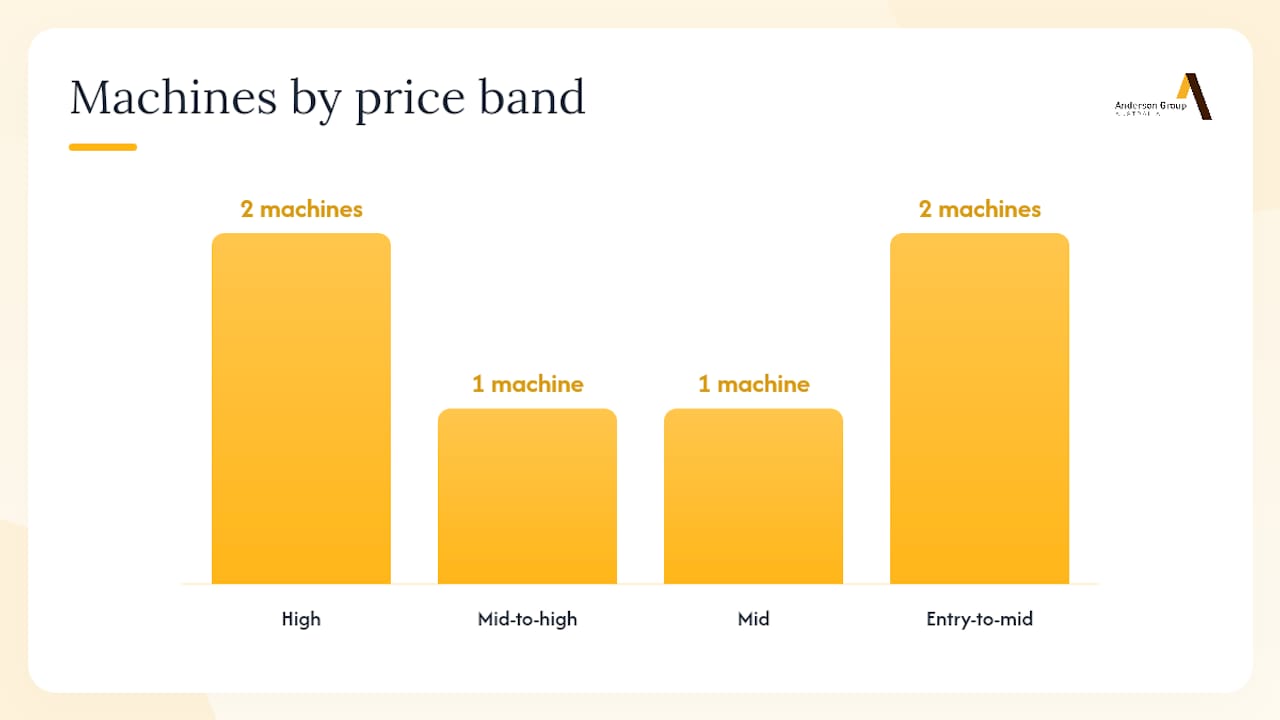
AXXIOM 5-Axis targets aerospace, automotive and marine manufacturers cutting complex geometry in aluminium, composites and engineering plastics. Confirm the required five-axis motion, repeatability, acceptance criteria and production duty for the exact configuration. Price band: high.
STRATOS CNC Machining Centre includes 3-axis nesting routers and 5-axis platforms for wood, panels, plastics, composites and specified non-ferrous materials. Confirm the selected model’s material suitability, tolerances, tooling and quoted configuration.
MASS-5 / MASS-B Large-Scale 5-Axis handles oversized parts that simply will not fit a standard work envelope — marine hull components, large aerospace structures, heavy automotive tooling. The MASS-B adds an enclosed format for controlled environments. Price band: high.
Focaseiki VMC-1100 / VMC-1250 / VMC-1400 are vertical machining centres suited to ferrous and non-ferrous metalwork where floor space is limited, but accuracy cannot be compromised. The three bed sizes let you match the envelope to the part rather than the other way around. Price band: entry to mid.
Genesis PLUS Nesting CNC is the right choice for furniture, cabinetry and panel processing operations running high-volume sheet goods. Its nesting software integration and vacuum hold-down system drive material yield and throughput. Price band: entry to mid.
MAXXIS 5-Axis fills the gap between a general-purpose router and a full machining centre, handling complex five-axis work on wood, composites and soft metals. Furniture manufacturers moving into curved or sculpted components shortlist this one. Price band: mid.
According to the IndustrySearch CNC machining centre buying guide, vertical machining centres commonly start in the mid-five figures, while production 5-axis machines sit in significantly higher bands. The 5-axis buying guide from IndustrySearch notes that 5-axis is critical for aerospace, medical and complex automotive components and requires skilled operators plus advanced CAD/CAM integration.
| Criteria | AXXIOM 5-Axis | STRATOS | MASS-5 / MASS-B | Focaseiki VMC-1100–1400 | Genesis PLUS | MAXXIS 5-Axis |
|---|---|---|---|---|---|---|
| Best for | Aerospace, automotive, marine | Wood/panels and specified advanced/non-ferrous materials | Large-format aerospace, marine | Metalwork, tight footprint | Furniture, panel processing | Furniture, composites |
| Accuracy focus | Confirm accuracy for the exact five-axis configuration | High repeatability | Large-envelope precision | High accuracy vertical | Sheet yield / nesting | 5-axis surface quality |
| Axes & envelope | 5-axis, mid-large | 3–5 axis, mid | 5-axis, large | 3-axis, compact–mid | 3-axis, panel format | 5-axis, mid |
| Spindle & power | High speed, high torque | Production-grade | Heavy-duty | Standard to high | Routing-optimised | Multi-material |
| Automation path | Confirm options for the exact configuration | Confirm options for the exact configuration | Confirm pallet and workholding options | Confirm automation options for the exact VMC model | Confirm loading, unloading and labelling options | Confirm any available automation options |
| Software compatibility | Confirm CAD/CAM post and any probing options | Confirm CAD/CAM post and any measurement options | CAD/CAM, custom post | CAD/CAM standard | Confirm included nesting software and postprocessor | CAD/CAM, routing post |
| Price band | High | Mid–high | High | Entry–mid | Entry–mid | Mid |
| After-sales support | Australian service network | Australian service network | Australian service network | Australian service network | Australian service network | Australian service network |
| Lead time | Request a current written estimate | Request a current written estimate | Request a current written estimate | Request a current written estimate | Request a current written estimate | Request a current written estimate |
How to build a project profile before you shortlist machines
The most expensive procurement mistake is choosing a machine first and then trying to fit your process around it. Start with a documented project profile.
-
Production volumes and batch structure. Define weekly part counts, batch sizes and whether you run continuous or campaign production. A machine optimised for long runs performs differently from one built for short-change-over batches.
-
Part tolerances and surface finish. State your tightest tolerance in microns, not millimetres. If your aerospace bracket needs ±5 µm positional accuracy, that eliminates a large portion of the market before you open a single catalogue.
-
Material mix. List every material you machine now and plan to machine in the next three years. Aluminium, mild steel, hardened tool steel, carbon fibre and hardwood each demand different spindle speeds, torque curves and coolant strategies.
-
Cycle time targets. Work backwards from your takt time. If a part must leave the machine every 8 minutes, spindle-on time and tool change speed become critical selection criteria.
-
Floor footprint and utilities. Measure your available floor area, ceiling height, three-phase power capacity and compressed air supply before you request quotes. A machine that cannot fit through your door or run on your power supply wastes everyone’s time.
-
Stakeholders. Involve engineering, maintenance, finance and your OH&S officer from day one. Set acceptance test KPIs in writing before you sign anything.
Pro Tip: Write your project profile as a one-page brief and attach it to every RFQ. Suppliers who respond with a generic quote rather than addressing your specific tolerances and volumes are telling you something important about their after-sales approach.
What technical specifications actually determine precision and productivity?
Accuracy and axes
Repeatability specs should be stated in microns, not “high precision.” Demand ISO 230-2 test results for positioning accuracy and repeatability. For five-axis work, also ask for angular accuracy data on the rotary axes. Three-axis verticals like the VMC series suit prismatic metalwork; five-axis machines like the AXXIOM and MAXXIS handle compound angles and undercuts in a single setup, which cuts cumulative error from multiple fixturings.
Spindle and structure
Spindle speed range, power (kW) and torque curve together determine what materials you can cut at what feed rates. A high-speed spindle suited to aluminium will struggle on hardened steel without a torque-rich alternative. Machine rigidity matters as much as spindle spec: look for hardened and ground ball screws, linear guideways and a cast or welded steel base with thermal compensation.
Control and software
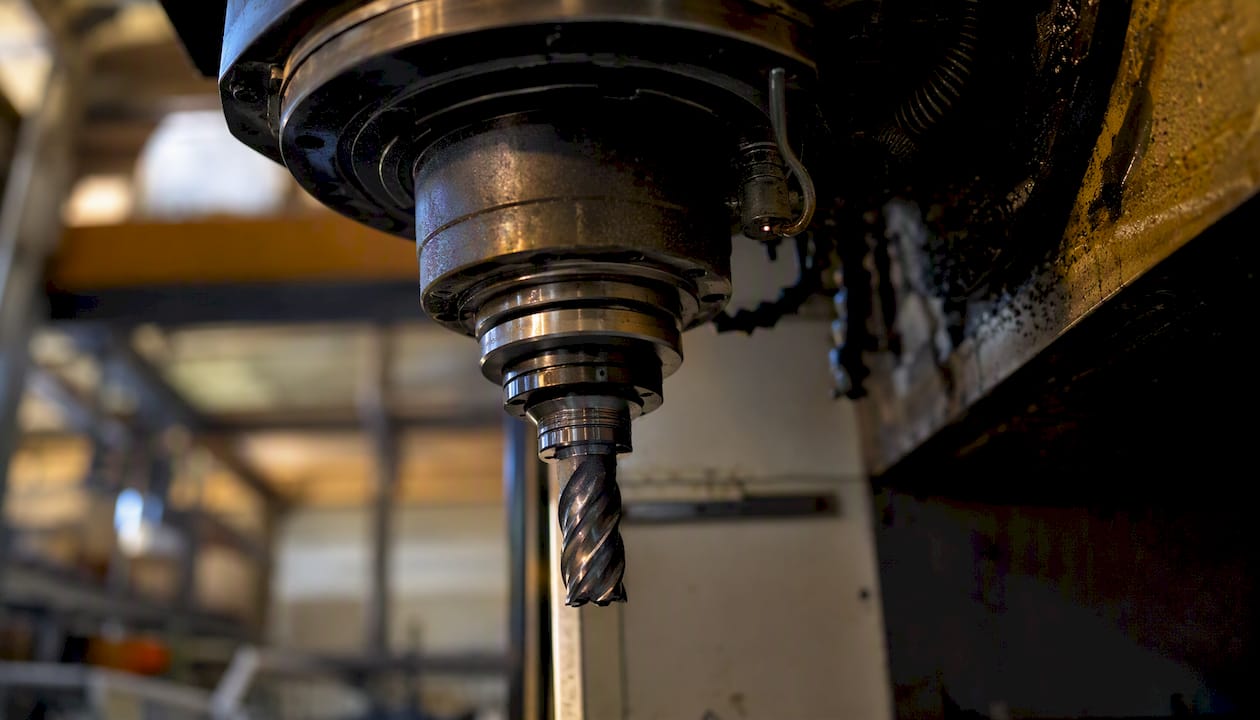
Ask which CNC control family the machine runs (Fanuc, Siemens, Heidenhain are common) and confirm your CAD/CAM system has a validated postprocessor for it. In-process probing and on-machine measurement reduce scrap and eliminate the need to move parts to a CMM for every check.
FAT and SAT documentation
Demand dimensional inspection reports, material certificates and calibration certificates for the FAT sample parts. These documents are your legal record that the machine was built to specification before it left the factory.
Pro Tip: Ask the supplier to machine a test part from your own material and drawing during the demo. A calibrated inspection report on that part, produced on the day, is worth more than any brochure specification.
Standards Australia requires buyers to verify compliance with AS/NZS 4024.1 for machine safety and to confirm suppliers hold ISO 9001 quality management certification. Request both documents before signing a purchase order.
What does high precision CNC machinery actually cost in Australia?
Price bands vary widely by machine class. Vertical machining centres start at typical entry-level prices; production 5-axis machines can be significantly more expensive for fully configured cells. Use these bands for budget planning, then get written quotes for your specific configuration.
Finance and tax
Equipment loans, hire purchase, leasing and supplier finance are all available to Australian manufacturers. Leasing preserves working capital and may offer off-balance-sheet treatment depending on structure; hire purchase builds equity and suits businesses that want ownership at term end. Properly structured equipment finance can preserve cash flow and offer tax advantages. Compare at least two lenders before committing.
On tax, the ATO’s small business depreciation rules include an instant asset write-off framework and small business pool approach. RSM Australia notes the $20,000 instant asset write-off is now permanent for eligible small businesses, and manufacturers should review tax priorities before 30 June each year. Verify your eligibility and the applicable thresholds with your accountant before timing a purchase around a tax event.
NSW manufacturers should also check the NSW Renewable Manufacturing Grant, which can fund purchase, installation and commissioning of plant and equipment for qualifying projects. Eligibility windows and funding ranges change, so confirm current criteria directly with the NSW Government.
What should you require from suppliers for delivery and support?
Delivery and installation checklist
-
Confirm site readiness: floor load rating, ceiling height, three-phase power, compressed air and extraction.
-
Arrange crane or heavy haulage with the supplier’s logistics team well before delivery.
-
Agree on anchoring, levelling and utility connection responsibilities in writing.
-
Dust extraction and coolant management must meet your local council and WorkSafe requirements.
Commissioning and training
-
On-site commissioning by factory-trained engineers, not third-party contractors.
-
Separate training sessions for operators and maintenance staff, with written sign-off.
-
SAT acceptance criteria agreed before commissioning begins, not after.
-
Full documentation handover: manuals, electrical schematics, spare parts list and calibration records.
Service commitments to lock in contractually
-
Australian-based factory-trained engineers with named response time SLAs.
-
Local spare parts stock for critical wear items (spindle bearings, ball screws, control boards).
-
Guaranteed parts lead times in writing, not verbal assurances.
-
Escalation pathway to the manufacturer’s technical team for complex faults.
-
Warranty length, scope and exclusions stated clearly, not buried in general terms.
Rigorous FAT/SAT and logistics planning is standard practice for heavy industrial machine procurement in Australia and reduces the risk of costly disputes after delivery.
How do you protect your capital with upgradeable machines?
Buying a machine with no upgrade path is a capital trap. Within three to five years, production volumes or part complexity often outgrow the original configuration, and a full replacement costs far more than a planned upgrade.
-
Auto-pallet changers (APCs): Confirm whether the exact machine and configuration support the required pallet-changing system, including the mechanical, electrical and control interfaces. Ask for the available installation or retrofit options and a project-specific cost and payback assessment before planning an upgrade.
-
Robotic loading: Requires mounting points, IO compatibility and sufficient floor clearance. Confirm these exist before signing.
-
Additional axes: Some machines accept a fourth or fifth axis retrofit; others do not. Ask for the upgrade specification sheet.
-
In-process probing: Often retrofittable via the control’s existing IO. Adds closed-loop quality control without stopping production.
-
Palletisation and fixturing systems: Modular zero-point clamping systems (Schunk, Erowa) integrate with most machining centres and dramatically cut setup time.
If you are already running double shifts or turning away work, buy the APC at the same time as the machine.
What questions should you ask suppliers and in demos?
A well-structured RFQ separates serious suppliers from order-takers.
-
Provide your project profile brief and ask for a written technical response addressing your specific tolerances, materials and volumes.
-
Request ISO 230-2 positioning accuracy and repeatability test results for the specific machine model, not a generic family spec.
-
Ask for FAT sample parts machined to a drawing you supply, with a calibrated CMM report.
-
Request the CV and location of the Australian service engineer who will commission your machine.
-
Ask for the local spare parts inventory list and the guaranteed lead time for your top-ten critical components.
-
Request references from two Australian customers in your industry who have taken delivery in the last two years.
-
Ask for the escalation pathway if the local engineer cannot resolve a fault within 24 hours.
A machine that is $20,000 cheaper but has no local engineer and a 12-week parts lead time will cost you more within 18 months.
Acceptance test pass/fail template: define minimum positioning accuracy (e.g. ±5 µm), surface finish (Ra value), spindle runout, and cycle time on your test part. Any result outside tolerance is a hold point, not a minor note.
What are the realistic lead times for delivery and commissioning in Australia?
-
Standard VMC or nesting CNC: Request a current written estimate for factory readiness, shipping and import clearance, and installation and site acceptance testing for the selected model and configuration. Confirm any stock-machine availability separately.
-
Configured 5-axis machine: Ask for the build, shipping and commissioning schedule in the current written proposal for the exact machine, tooling and options. Confirm whether any configuration changes affect the estimate.
-
Large-format or automated cell: Request a project-specific written schedule covering the agreed machine and automation configuration, shipping, site preparation and commissioning. Confirm responsibilities and acceptance milestones before planning production around the estimate.
Delivery risk is real and underestimated. Component shortages, port congestion and heavy-haulage scheduling have all extended lead times for Australian buyers in recent years. Build a minimum 4-week buffer into your production plan, negotiate liquidated damages clauses for late delivery, and confirm import clearance requirements (AQIS, customs classification) with your freight forwarder before signing the purchase order.
Common mitigation steps: order critical long-lead components (spindle motors, control units) early, confirm the supplier’s current factory load before committing to a delivery date, and arrange site readiness inspections at least six weeks before the expected delivery.
Your 90-day plan to close a high precision CNC purchase
Anderson’s AXXIOM, STRATOS, MASS, VMC, Genesis PLUS and MAXXIS families cover the full range of Australian manufacturing needs, including panel nesting and five-axis aerospace work. The deciding factors are precision spec, local service depth and a clear upgrade path.
-
Days 1–30: Complete your project profile. Shortlist two or three machine families. Request demos and FAT documentation from Anderson. Confirm Australian service engineer availability.
-
Days 31–60: Compare written quotes using the weighted scoring model above. Run finance comparisons across at least two lenders. Confirm tax eligibility with your accountant before committing to purchase timing.
-
Days 61–90: Finalise FAT acceptance criteria in writing. Negotiate warranty scope, parts SLAs and liquidated damages. Schedule commissioning and operator training dates. Sign the purchase order with all acceptance criteria attached.
What experienced buyers know that first-timers miss
Review the supplier’s documented installation, acceptance and support arrangements alongside the machine specification.
Anderson Group Australia supplies CNC machinery, servicing and spare parts. Confirm the exact machine configuration, installation arrangements and available support with the team.
Local support is not a nice-to-have. When a spindle goes down on a Friday afternoon and your production schedule is at risk, the difference between a local factory-trained engineer and an overseas support line is measured in days of lost output. Prioritise the service commitment as seriously as the machine specification.
Anderson Group Australia: precision machinery with local support behind it
Anderson Australia supplies CNC machinery for wood, metal and advanced materials. Discuss the exact machine capabilities and confirm installation, training and service options in the proposal.
Whether you are shortlisting your first five-axis machine or expanding an existing cell with APC automation, Anderson’s team can walk you through FAT documentation, site readiness requirements and finance options before you commit. Explore the industries Anderson works with to find the machine families matched to your sector, or contact Anderson directly to book a demonstration and request a written service commitment for your location.